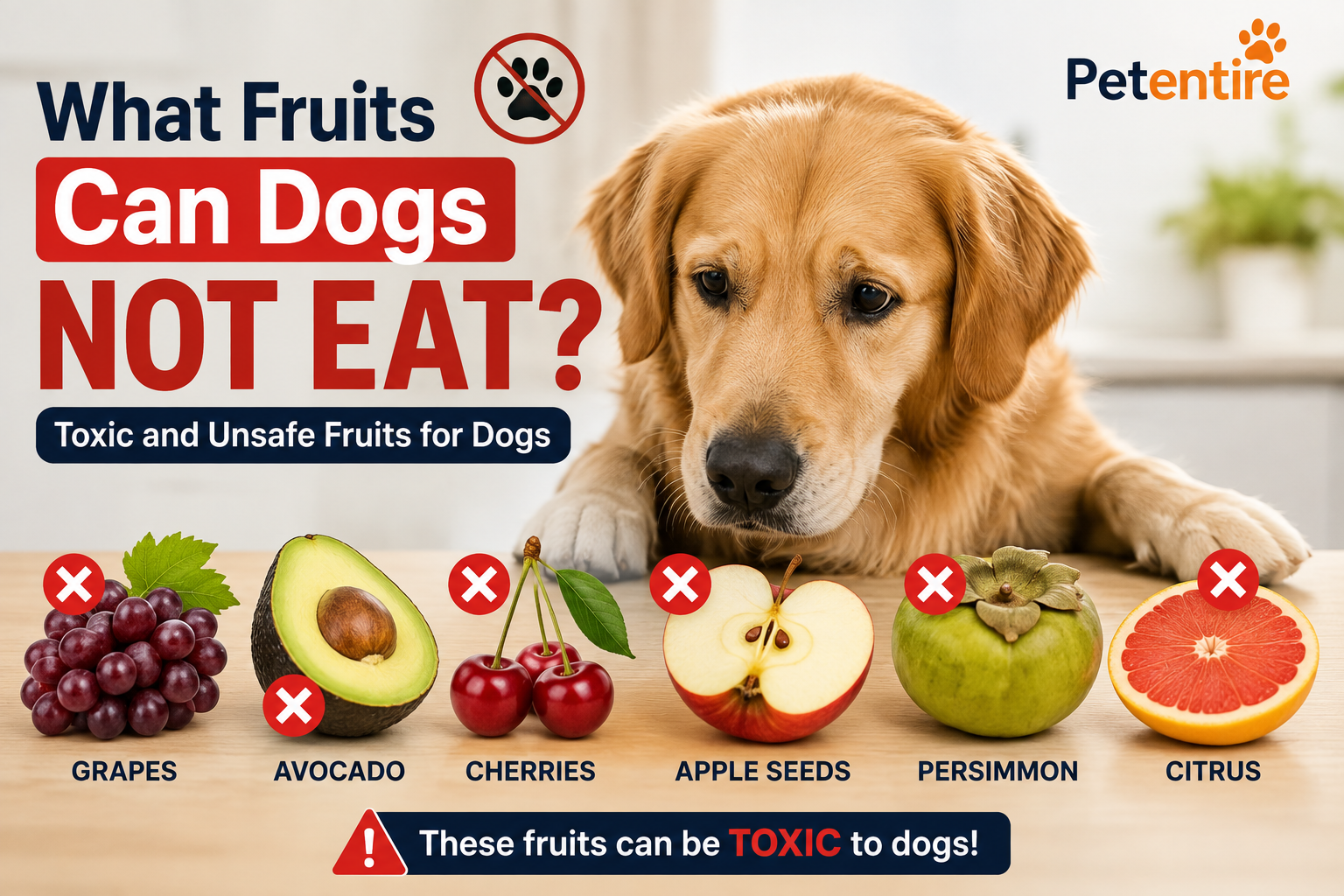
Seeing your dog eat fruit can raise a simple question: What fruits can dogs not eat? Grapes and raisins are the biggest concern because they can cause serious kidney injury in dogs, and the dangerous amount is unpredictable. Other fruits are different. Their flesh may be suitable for dogs, while pits, seeds, stems, leaves, tough rinds, or excessive portions can create poisoning, choking, intestinal blockage, or digestive problems.
Quick Answer
Dogs should never eat grapes or raisins because they can cause acute kidney injury and potentially kidney failure. Other fruits, including cherries, peaches, plums, and apricots, become risky mainly because of their pits, stems, or leaves. Many fruits are safe when properly prepared and served in small portions.
What Fruits Can Dogs Not Eat?
Not every fruit on an “avoid” list is poisonous. Some are dangerous because they contain toxic compounds, while others become unsafe because of pits, seeds, stems, leaves, or difficult-to-digest parts.
Grapes and Raisins
Grapes and raisins should be completely avoided. In some dogs, ingestion can cause vomiting, diarrhea, lethargy, dehydration, and acute kidney injury that may progress to kidney failure. The suspected toxic component is tartaric acid, although the exact mechanism is still being studied.
There is no reliably safe amount to give your dog. Toxic effects have occurred after relatively small exposures, and individual sensitivity varies. This includes seedless and seeded grapes, red and green grapes, and foods containing raisins.
Cherries
Cherry flesh isn’t considered equivalent to grape toxicity. The bigger concerns are the cherry pits, stems, and leaves, which contain cyanogenic compounds. Swallowed pits can also create a choking or intestinal blockage risk.
A whole cherry therefore isn’t a good dog treat. If you offer a small amount of cherry flesh, remove the pit, stem, and leaves completely.
Peaches
Plain peach flesh can be offered in small amounts when properly prepared. The peach pit, however, presents a choking and intestinal blockage hazard and contains cyanogenic compounds.
Never let your dog chew or swallow a peach pit. Remove the pit completely before giving any peach.
Plums
Plum flesh isn’t the primary concern. The plum pit, stem, and leaves are the parts that require caution because of potential cyanogenic compounds and the possibility of physical obstruction.
If your dog eats plum, make sure the pit hasn’t been swallowed. A swallowed pit may require veterinary assessment depending on the dog’s size, the pit’s size, and the circumstances.
Apricots
Apricot flesh can be suitable for dogs in small portions when the fruit is prepared correctly. The pit, stem, and leaves are more concerning because they can contain cyanogenic compounds, while the pit can become a choking or blockage hazard.
Only offer the prepared flesh, never the stone or plant parts.
Persimmons
Persimmons aren’t generally treated like grapes or raisins, but their seeds can cause problems if swallowed. Seeds and large pieces can contribute to digestive obstruction, particularly when several are consumed.
If you give persimmon, remove the seeds and offer only a small amount of prepared fruit.
Avocado
Avocado deserves a different classification. It isn’t equivalent to grape or raisin toxicity in dogs. The pit is a major physical hazard, and avocado is also relatively high in fat, which may cause digestive upset in some dogs.
Small amounts of plain avocado flesh may be tolerated by some dogs, but the pit, skin, and large portions should be avoided.
Citrus Fruits
Lemons, limes, grapefruit, and oranges aren’t in the same toxicity category as grapes. Small amounts of edible citrus flesh may be tolerated by many dogs, but the peel, seeds, and large quantities can cause stomach upset.
Because citrus is acidic and may irritate the digestive system, it’s better treated as an occasional food rather than a regular snack.
Other Fruits to Avoid or Limit
Unidentified wild berries should be avoided because you may not know which plant produced them. Some wild berries and plants can be toxic to dogs.
Processed fruit products also deserve caution. Fruit-flavored snacks, baked goods, jams, canned fruit, and sweetened products can contain large amounts of sugar or other ingredients that aren’t suitable for dogs. Products containing xylitol are particularly dangerous and require separate poison guidance.
Why Are Some Fruits Dangerous for Dogs?
Fruit can become hazardous for several completely different reasons. Understanding those differences makes dog fruit safety much easier than memorizing one long list.
Toxic Compounds Can Cause Poisoning
Some fruits contain compounds that can harm dogs. Grapes and raisins are the clearest example because ingestion has been associated with acute kidney injury.
Seeds and Pits Can Contain Harmful Compounds
Some fruit seeds and pits contain cyanogenic compounds that can release cyanide when damaged or digested. The risk depends on the fruit, the amount eaten, and whether the seed or pit was actually chewed or swallowed.
Pits Can Cause Choking or Intestinal Blockage
Even when a fruit’s flesh is safe, a large pit can become a choking hazard or cause an intestinal blockage. Peach pits, plum pits, cherry pits, apricot pits, and avocado pits are examples.
Fruit Peels and Stems Can Be Difficult to Digest
Tough peels, rinds, stems, and leaves may be difficult for dogs to digest. They can also become a physical obstruction when eaten in large pieces.
That doesn’t mean every fruit peel is poisonous. The concern is often digestibility, texture, size, or contamination rather than toxicity.
Large Amounts Can Cause Digestive Problems
Even safe fruits for dogs can cause trouble when a dog eats too much. Their natural sugars, fiber, and water content can lead to diarrhea, gas, vomiting, or abdominal discomfort.
Which Parts of Fruit Should Dogs Not Eat?
For many fruits, the safest choice is to serve only the edible flesh. Remove hard, fibrous, or potentially harmful parts before feeding fruit to your dog.
Fruit Pits and Stones
Remove all fruit pits and stones before serving. They can cause choking or intestinal blockage, and some contain potentially harmful compounds.
Fruit Seeds
Seeds deserve different treatment depending on the fruit. Remove seeds from apples, pears, watermelon, and other fruits whenever practical, especially before giving larger portions.
Stems and Leaves
Stems and leaves can be difficult to digest, and certain fruit plants contain compounds that may be harmful. Remove them before serving.
Fruit Peels and Rinds
Some soft peels are edible, but tough rinds can be difficult to digest or may present a choking problem. Watermelon rind and pineapple skin, for example, should be removed.
Cores
Apple and pear cores are hard and can become choking or blockage hazards. Their seeds should also be removed.
What Fruits Can Dogs Eat Safely?
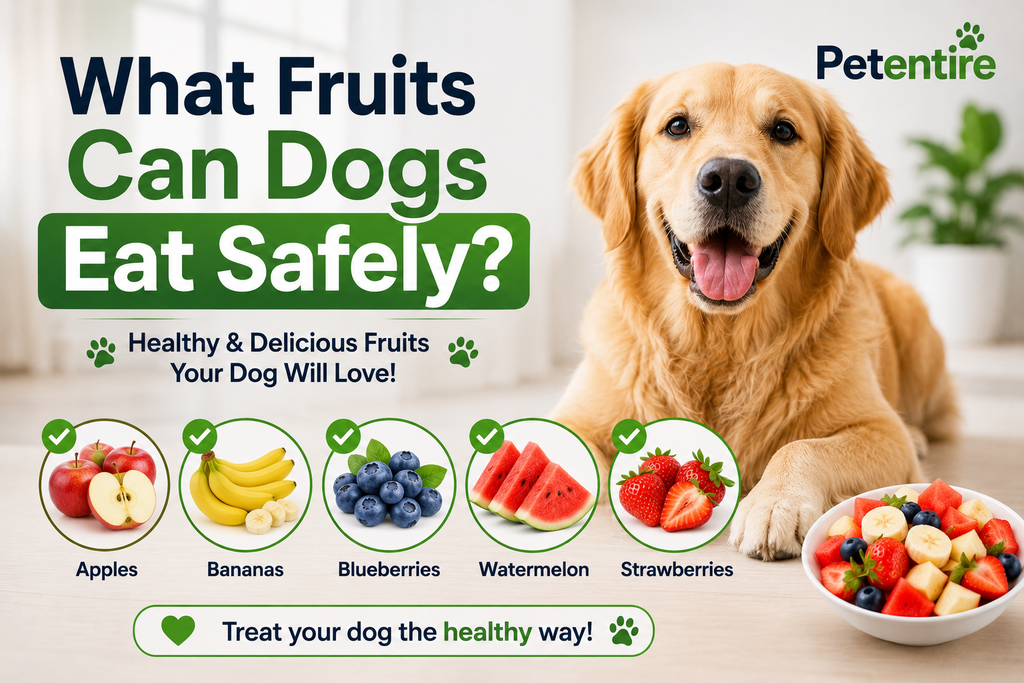
Many ordinary fruits can make occasional treats for dogs. “Safe,” however, doesn’t mean unlimited. Preparation, portion size, and your dog’s individual health all matter.
Apples
Dogs can eat plain apple flesh. Remove the seeds and core, then cut the fruit into small pieces.
Bananas
Bananas can be given as an occasional treat. They contain natural sugar, so large portions aren’t ideal, especially for dogs that need careful calorie control.
Blueberries
Blueberries are convenient bite-sized treats for many dogs. Wash them first and introduce them gradually if your dog hasn’t eaten them before.
Strawberries
Strawberries can be served fresh and washed, with the leafy top removed. Cut larger berries into smaller pieces for dogs that tend to swallow food quickly.
Watermelon
Watermelon can be refreshing because it contains a lot of water. Remove the rind and seeds and serve small pieces of the flesh.
Mango
Mango flesh can be offered in moderation. Always remove the large pit and skin, then cut the flesh into manageable pieces.
Pineapple
Fresh pineapple can be given in small portions. Remove the tough outer skin and hard core before serving.
Pears
Plain pear flesh can be suitable for dogs. Remove the seeds and hard core, wash the fruit, and cut it into small pieces.
How Should Fruit Be Prepared for Dogs?
Good preparation removes many of the avoidable risks associated with feeding fruit. Think of fruit as a treat that needs basic kitchen preparation rather than something to hand over whole.
Wash the Fruit Thoroughly
Wash fresh fruit under running water before cutting it. This helps remove dirt and surface contaminants.
Remove Pits and Stones
Never intentionally give your dog fruit containing a pit or stone. Check the flesh after cutting to make sure the hard center has been completely removed.
Remove Seeds When Appropriate
Remove seeds from fruits such as apples and pears. With watermelon, seedless varieties can make preparation easier, but the fruit should still be served in manageable pieces.
Remove Stems, Leaves, and Cores
Discard stems, leaves, and hard cores. These parts add little nutritional value and may create digestive or physical hazards.
Cut Fruit Into Small Pieces
Bite sized pieces are easier for dogs to chew and can reduce the risk of swallowing large chunks.
Remove Tough Peels and Rinds
Remove thick or tough outer layers that dogs may struggle to digest, including pineapple skin and watermelon rind.
Avoid Added Sugar, Salt, and Seasonings
Serve plain fruit. Avoid syrups, sweeteners, salt, chocolate coatings, spices, and other human-food additions.
Serve Small Portions
Fruit should remain an occasional treat rather than becoming a major part of the diet. This helps keep treats from displacing nutritionally complete dog food.
Can Dogs Eat Fruit in Large Amounts?
Even nutritious fruit can cause problems when eaten excessively. A dog’s response depends on the fruit, portion, individual tolerance, and overall diet.
Diarrhea
A sudden increase in fruit, particularly high-fiber fruit, can loosen stools or cause diarrhea.
Vomiting
Some dogs may vomit after eating too much fruit or trying a new food that doesn’t agree with them.
Gas and Bloating
Extra fiber and fermentable carbohydrates can contribute to gas or bloating in some dogs.
Abdominal Discomfort
Overeating fruit can leave a dog with stomach discomfort, particularly when the food is unfamiliar.
Too Much Sugar and Calories
Fruit contains natural sugar and calories. Large servings can contribute unnecessary calories even when the fruit itself is nutritious.
Why Moderation Matters
There isn’t one universal fruit portion that works for every dog. Dog fruit portions should account for body size, activity, calorie requirements, existing diet, and health conditions.
What Happens If a Dog Eats a Toxic or Unsafe Fruit?
The signs depend on what the dog ate, how much was consumed, and whether the problem involves poisoning, digestive irritation, or a swallowed object.
Vomiting
Vomiting can occur with gastrointestinal irritation and several types of fruit poisoning.
Diarrhea
Loose stool or diarrhea may develop after eating excessive fruit or a harmful food.
Loss of Appetite
A dog that suddenly refuses food after a suspected toxic ingestion needs close attention.
Lethargy or Weakness
Unusual tiredness, weakness, or reduced responsiveness can signal a more serious problem.
Abdominal Pain
Restlessness, a tense abdomen, unusual posture, or sensitivity around the belly can indicate abdominal discomfort.
Increased Thirst or Urination
Changes in drinking or urination can be particularly concerning after grape or raisin exposure because kidney injury may develop after the initial digestive signs.
Difficulty Breathing
Breathing difficulty is an emergency sign regardless of the suspected fruit.
Tremors or Seizures
Tremors, seizures, or severe neurological changes require urgent veterinary care.
Kidney Problems
Grape and raisin poisoning can progress from gastrointestinal signs to acute kidney injury, with reduced or absent urine production in severe cases.
My Dog Ate a Fruit It Shouldn’t Have—What Should I Do?
Don’t guess based only on whether your dog looks normal. Some toxic exposures can initially produce few or no obvious signs.
Find Out What Fruit Your Dog Ate
Identify the fruit, product, or food as accurately as possible. Keep packaging or take a photo if the food came from a package.
Estimate How Much Was Eaten
Try to determine approximately how much your dog consumed and when the ingestion happened. Exact information can help a veterinarian assess the situation.
Check Whether Seeds, Pits, or Other Parts Were Swallowed
Find out whether your dog ate the flesh only or also swallowed a pit, seed, stem, leaf, core, peel, or rind.
Contact Your Veterinarian
For suspected toxic ingestion, contact your veterinarian or an appropriate pet poison service for individualized advice.
Don’t Wait for Symptoms if the Fruit May Be Toxic
A dog can appear completely normal after a recent toxic ingestion. Grapes and raisins are a particularly important example because kidney injury may develop later.
Don’t Make Your Dog Vomit Unless a Veterinary Professional Tells You To
Do not induce vomiting unless a veterinarian or qualified pet poison professional specifically instructs you to do so. The correct response depends on what was eaten, how long ago it happened, the dog’s condition, and the potential risks of vomiting.
What Should I Do If My Dog Ate Grapes or Raisins?
Grape and raisin ingestion deserves faster attention than an ordinary case of a dog eating too much fruit. Veterinary sources associate these foods with potentially severe kidney injury, and the response is unpredictable.
Why Grapes and Raisins Are Dangerous
Grapes and raisins can cause gastrointestinal illness followed by acute kidney injury in some dogs. Tartaric acid is a leading proposed toxic component, but the exact mechanism is not considered completely established.
What Signs Can Develop?
Early signs may include vomiting, diarrhea, loss of appetite, lethargy, weakness, dehydration, abdominal pain, increased thirst, and tremors. More severe cases can progress to reduced or absent urine production as kidney injury develops.
How Quickly Should You Contact a Veterinarian?
Contact your veterinarian promptly after known grape or raisin ingestion, even if your dog currently appears healthy. Early veterinary assessment gives the medical team more options before serious kidney injury develops.
Why You Shouldn’t Wait for Symptoms
The absence of symptoms doesn’t prove that a dog is safe. Gastrointestinal signs may occur hours after ingestion, while kidney problems can develop later.
When Is Fruit Poisoning in Dogs an Emergency?
Some situations should be treated as urgent rather than monitored at home. Known grape or raisin ingestion deserves prompt veterinary advice even when symptoms haven’t appeared.
Suspected Toxic Fruit Ingestion
If your dog has eaten grapes, raisins, or another fruit you believe may be poisonous, seek professional guidance promptly.
Repeated Vomiting
Repeated vomiting can lead to dehydration and may accompany poisoning or an intestinal problem.
Severe Weakness or Lethargy
Marked weakness, difficulty standing, or unusual unresponsiveness warrants urgent assessment.
Difficulty Breathing
Breathing difficulty can indicate a serious emergency and should never be attributed to ordinary fruit-related stomach upset.
Collapse
Collapse requires immediate veterinary attention.
Seizures or Tremors
Seizures or significant tremors are emergency signs that need immediate professional care.
Severe Abdominal Pain
Severe or persistent abdominal pain can occur with serious gastrointestinal disease or an intestinal obstruction.
Trouble Urinating or Major Changes in Urination
Reduced, absent, or dramatically increased urination can be particularly concerning after grape or raisin exposure because of possible kidney involvement.
How Much Fruit Can Dogs Eat?
Fruit is best viewed as an occasional treat, not a replacement for a complete and balanced canine diet. There is no single serving size that suits every dog.
Fruit Should Be an Occasional Treat
Keep fruit treats modest and account for them within your dog’s overall daily calorie intake.
Portion Size Depends on the Dog
Appropriate portions depend on body size, calorie needs, activity level, age, existing diet, and health. Dogs with certain medical or dietary needs may require individualized advice.
Smaller Dogs Need Smaller Portions
A portion that seems tiny to a large dog can represent a much larger share of a small dog’s daily food intake. Start conservatively.
Introduce New Fruits Gradually
Offer a small amount when introducing a new fruit. Watch for diarrhea, vomiting, gas, or other signs of digestive upset before offering more.
Fruits Dogs Can and Can’t Eat: Quick Safety Chart
The chart below separates genuine toxic concerns from fruits that are generally suitable when properly prepared.
| Fruit | General Safety | Important Note |
| Grapes | Avoid completely | Can cause acute kidney injury and kidney failure in some dogs |
| Raisins | Avoid completely | Dried grapes; potentially severe kidney toxicity |
| Cherries | Limited / prepared | Remove pit, stem, and leaves |
| Peaches | Generally safe flesh | Remove pit and stem; never allow pit to be swallowed |
| Plums | Generally safe flesh | Remove pit, stem, and leaves |
| Apricots | Generally safe flesh | Remove pit, stem, and leaves |
| Persimmons | Limited / prepared | Remove seeds; large amounts may cause digestive problems |
| Avocado | Limited | Avoid pit; high fat may cause digestive upset |
| Lemons & limes | Limited | Edible flesh in small amounts; avoid peel and excessive amounts |
| Apples | Generally safe | Remove seeds and core |
| Bananas | Generally safe | High in natural sugar; serve moderately |
| Blueberries | Generally safe | Wash and serve in small portions |
| Strawberries | Generally safe | Wash and remove leafy tops |
| Watermelon | Generally safe | Remove rind and seeds |
| Mango | Generally safe | Remove pit and skin; control portions |
| Pineapple | Generally safe | Remove skin and tough core |
| Pears | Generally safe | Remove seeds and core |
| Cantaloupe | Generally safe | Remove rind and seeds; serve moderately |
Frequently Asked Questions About Fruits Dogs Can’t Eat
These questions cover the most common concerns dog owners have about toxic fruits, fruit preparation, and appropriate portions.
What fruits can dogs not eat?
Dogs should never be given grapes or raisins because they can cause serious kidney injury. Other fruits may be unsafe because of pits, seeds, stems, leaves, tough rinds, excessive portions, or unidentified plant material.
What fruits are poisonous to dogs?
Grapes and raisins are the major fruits associated with serious poisoning in dogs. Their ingestion can lead to acute kidney injury and potentially kidney failure.
Can dogs eat grapes?
No. Grapes should not be fed to dogs. Any known ingestion should receive prompt veterinary guidance because the amount that causes illness is unpredictable.
Can dogs eat raisins?
No. Raisins are dried grapes and can cause severe kidney injury in dogs. Do not wait for symptoms before seeking professional advice after ingestion.
Can dogs eat cherries?
Dogs can potentially eat a small amount of properly prepared cherry flesh, but whole cherries aren’t a good choice. Remove the pit, stem, and leaves first.
Can dogs eat peach pits?
No. Peach pits should never be given to dogs. They can cause choking or intestinal blockage and contain potentially harmful cyanogenic compounds.
Can dogs eat apples?
Yes, plain apple flesh can be a dog-friendly treat. Remove the seeds and hard core, wash the apple, and cut it into small pieces.
Can dogs eat watermelon?
Yes. Plain watermelon flesh can be suitable in moderation. Remove the rind and seeds before serving.
What should I do if my dog eats a toxic fruit?
Identify the fruit, estimate how much was eaten, determine whether pits or seeds were swallowed, and contact a veterinarian or qualified pet poison professional. Don’t induce vomiting unless specifically instructed to do so.
How much fruit can a dog eat?
There is no universal amount for every dog. Consider the dog’s size, calorie requirements, activity, health, and existing diet. Fruit should remain an occasional treat rather than replacing complete dog food.
What fruit is safe for dogs?
Apples without seeds or cores, bananas, blueberries, strawberries, watermelon without rind or seeds, mango without its pit, pineapple without its skin and core, pears without seeds or cores, and small amounts of cantaloupe are generally suitable when properly prepared.
What happens if a dog eats grapes?
A dog may initially develop vomiting or diarrhea, followed by lethargy, weakness, dehydration, increased thirst, abdominal pain, and potentially acute kidney injury. Severe kidney failure can develop within the following days.
Final Takeaway
Knowing what fruits can dogs not eat is less about memorizing a huge blacklist and more about understanding the risks. Grapes and raisins are the major fruits to avoid because they can cause serious kidney injury. Other fruits are often safe only after removing pits, seeds, stems, leaves, cores, or tough rinds.
For everyday feeding fruit to dogs, choose plain, properly prepared fruit in modest portions. If your dog eats grapes, raisins, an unknown fruit, or a large pit, don’t rely on symptoms alone. Get veterinary guidance promptly.
Internal linking opportunities for PetEntire: this article can naturally link to your Pet BMI Calculator from the portion/calorie section, and future PetEntire articles about dog treats, healthy dog foods, dog vomiting, diarrhea in dogs, kidney problems, and pet nutrition can be cross-linked where contextually relevant.
Veterinary disclaimer: This article provides general educational information and isn’t a substitute for individualized veterinary diagnosis or treatment. For suspected poisoning, obstruction, or a serious reaction, contact a veterinarian or qualified pet poison professional.