Introduction
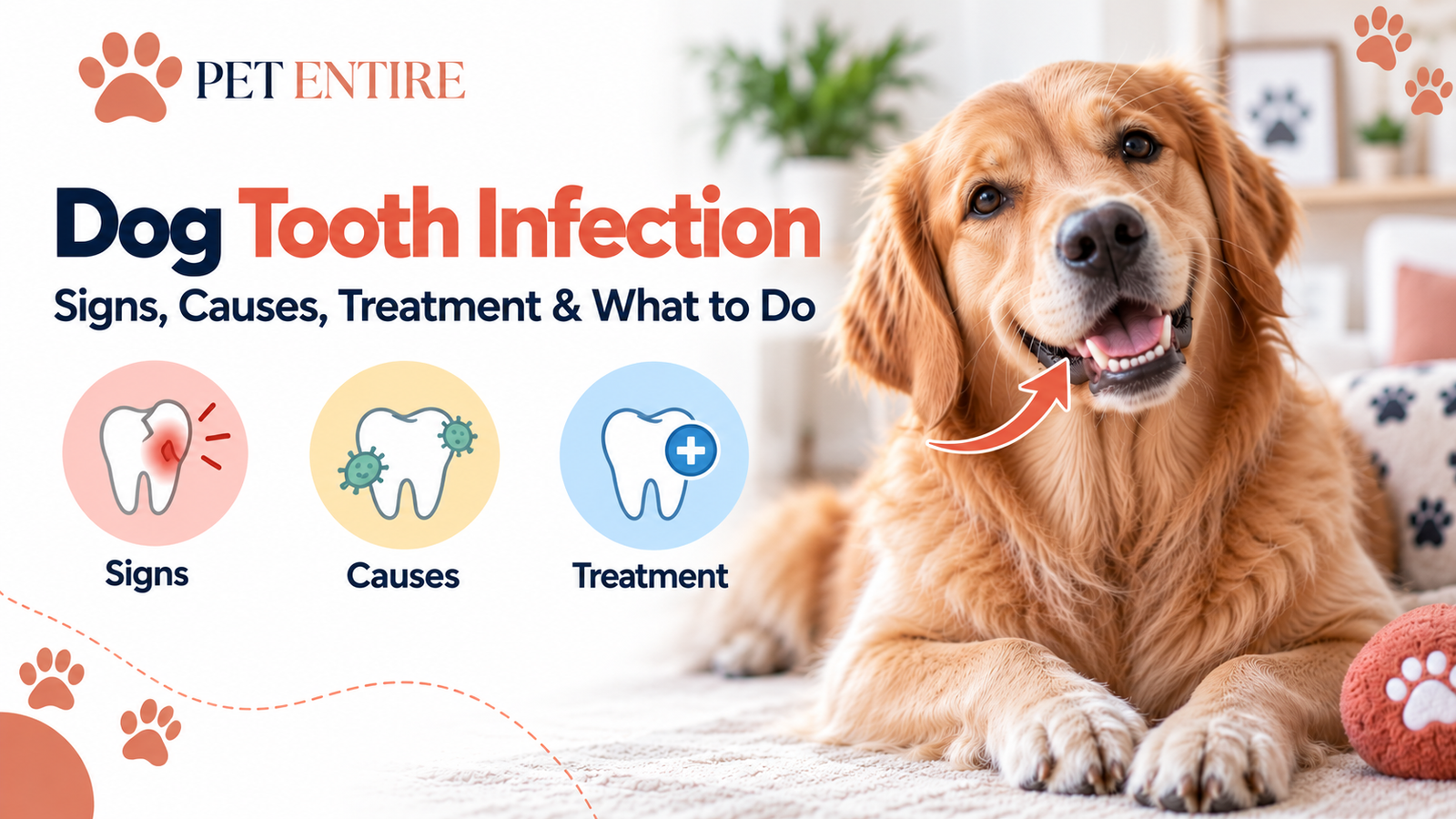
A dog tooth infection can cause pain, bad breath, swollen gums, trouble chewing, drooling, or swelling around the face. Some dogs continue eating and acting normally despite dental pain, so the absence of obvious distress doesn’t rule out a problem. A broken tooth, advanced periodontal disease, or damage to the inner tooth can allow bacteria to reach deeper tissues and create an infection or abscess.
Veterinary attention is important when these signs appear because an infected tooth can’t always be assessed from its visible surface. Dental X-rays may be needed to examine the tooth root and surrounding bone. Treatment depends on the cause and may involve extraction or root canal therapy rather than antibiotics alone. This article provides general information and isn’t a substitute for an examination by your veterinarian.
What Is a Tooth Infection in Dogs?
A tooth infection occurs when bacteria infect the inner part of a tooth or the tissues surrounding its root. One common route is a damaged or fractured tooth that exposes deeper structures. Infection can also develop alongside advanced periodontal disease, where bacteria and inflammation affect the tissues supporting a tooth.
A dog tooth infection isn’t always visible when you look inside the mouth. More than half of a tooth’s structure lies below the gumline, which is one reason dental radiographs are so useful. A tooth that looks acceptable from the outside can still have disease around its root.
How a Dog Tooth Becomes Infected
A healthy tooth has enamel and dentin that protect the pulp inside. The pulp contains nerves and blood vessels. When a fracture reaches the deeper tooth structures, bacteria can enter the pulp, causing inflammation and eventually tissue death. Infection may then extend through the root tip into the surrounding bone.
Periodontal disease provides another route. As inflammation and bacterial infection progress around the tooth, supporting tissues can deteriorate. In either situation, the underlying cause needs to be identified before treatment can be chosen.
Dog Tooth Infection vs. Tooth Abscess
A tooth infection refers broadly to bacterial infection involving a tooth or nearby tissues. A tooth abscess is a more specific condition in which pus collects because of infection. A tooth-root abscess can develop when bacteria reach the root canal and surrounding tissues.
These terms can overlap in everyday conversation, but they aren’t identical. An abscess may produce facial swelling, drainage, or a swollen area around a tooth. Some infected teeth show much less obvious outward change.
Can a Dog Have a Tooth Infection Without Obvious Symptoms?
Yes. Dogs can continue eating, playing, and behaving normally despite significant dental disease. Pain may show up through subtle changes instead, such as chewing more slowly, dropping food, avoiding hard treats, or resisting touch around the face.
A normal-looking tooth also doesn’t guarantee that the root is healthy. Dental radiographs can reveal abnormalities hidden beneath the gumline that cannot be identified during a simple visual check.
What Are the Signs of a Tooth Infection in Dogs?
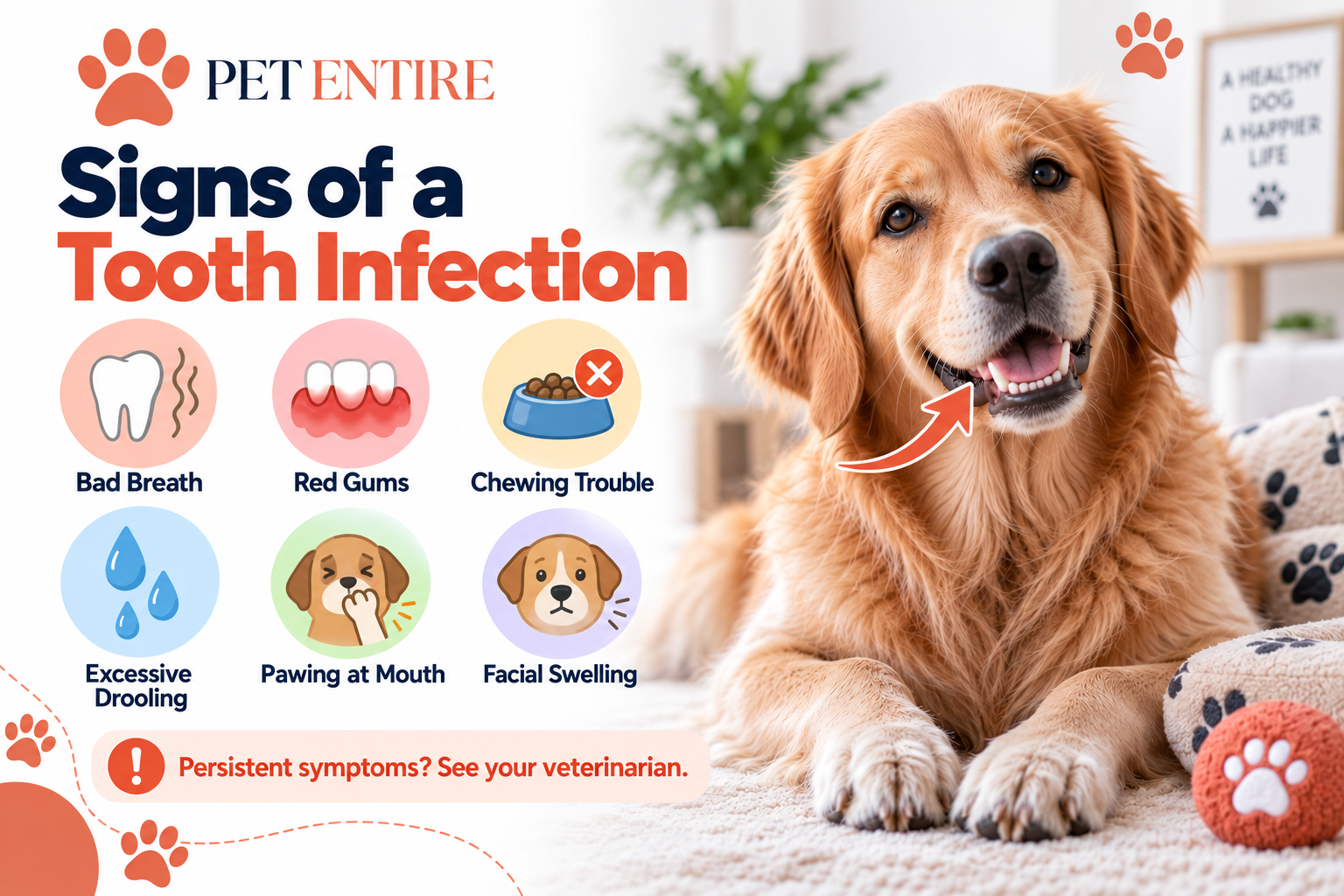
Common dog tooth infection symptoms include persistent bad breath, red or swollen gums, drooling, chewing changes, facial swelling, and sensitivity around the mouth. Some dogs also paw at their face or become less interested in food and toys.
These signs don’t prove that an infection is present. Gingivitis, periodontal disease, a fractured tooth, oral injury, and other mouth conditions can look similar. A veterinary examination is needed to determine the actual cause.
Bad Breath That Does Not Go Away
Persistent foul breath is often one of the earliest clues that something is wrong with a dog’s mouth. Plaque, tartar, inflamed gums, periodontal disease, and infected dental tissues can all contribute to unpleasant odor.
A sudden change deserves more attention than ordinary “dog breath.” If bad breath appears alongside chewing problems, swollen gums, drooling, or facial discomfort, arrange a veterinary dental examination.
Red, Swollen, or Bleeding Gums
Healthy gums are generally firm and pink, although some dogs naturally have dark pigmentation. Redness, swelling, or bleeding around the teeth can indicate gingival inflammation or more advanced periodontal disease.
Gum inflammation doesn’t automatically mean a tooth is infected. Still, persistent inflammation should be addressed because periodontal disease can damage the tissues that hold teeth in place.
Difficulty Eating or Chewing
A dog with dental pain may still approach the food bowl. You might notice that your dog chews slowly, drops pieces, tilts the head while eating, or favors one side of the mouth.
Some dogs begin avoiding hard treats or crunchy food. Others stop carrying toys they previously enjoyed. These changes can be especially useful clues when no obvious swelling is present.
Drooling More Than Usual
Excessive drooling can occur with painful or inflamed mouth conditions. Some dogs produce more saliva when chewing becomes uncomfortable or when oral tissues are irritated.
Look for changes in the amount, appearance, or odor of the saliva. Blood-tinged saliva, facial rubbing, bad breath, or eating difficulties make a veterinary examination more important.
Pawing at the Mouth or Rubbing the Face
Repeated pawing at the mouth can indicate oral discomfort. A dog may also rub one side of the face against furniture, carpeting, or the floor when a particular tooth hurts.
This behavior isn’t specific to infection. Still, repeated facial rubbing becomes more concerning when it occurs with bad breath, chewing changes, gum swelling, or sensitivity around the mouth.
Facial or Jaw Swelling
Facial swelling can occur when infection from a tooth root extends into nearby tissues. An upper tooth infection may cause swelling beneath the eye because some tooth roots sit close to that area.
Sudden swelling deserves prompt veterinary attention. Emergency evaluation is particularly important if swelling interferes with breathing or swallowing, or if your dog becomes severely weak or unwell.
Loose, Broken, or Discolored Teeth
A broken tooth can expose deeper structures and create an opportunity for bacteria to enter. A tooth that becomes unusually dark after trauma can also warrant veterinary assessment.
Loose teeth may indicate damage to the tissues supporting them. Advanced periodontal disease can weaken those structures, while trauma can directly damage the tooth itself.
Loss of Appetite or Changes in Eating Habits
A change in eating behavior can sometimes reflect mouth pain rather than a digestive problem. Your dog may take longer to finish meals, choose softer food, or hesitate before chewing.
A complete refusal to eat is more concerning, particularly when it occurs with facial swelling, marked pain, lethargy, or other illness signs. Those changes warrant prompt veterinary advice.
Pain, Irritability, or Behavioral Changes
Dogs don’t always cry or whine when their teeth hurt. Instead, they may become quieter, less playful, more irritable, or reluctant to have their head touched.
Watch for changes from your dog’s normal behavior. A sudden dislike of chewing toys or an unusual reaction when the face is handled can provide useful information for your veterinarian.
Lethargy or Other Signs of Illness
Dental disease can cause substantial discomfort, but lethargy has many possible causes. It shouldn’t automatically be blamed on a tooth infection.
When lethargy appears with facial swelling, significant oral pain, poor appetite, fever, or rapid deterioration, prompt veterinary assessment is appropriate. Severe weakness or breathing difficulty warrants emergency care.
What Causes Tooth Infections in Dogs?
A dog tooth infection can develop after a deep fracture, dental trauma, or disease affecting the tissues around a tooth. Periodontal disease is another important cause because infection can damage the structures supporting individual teeth.
The cause matters because treatment isn’t one-size-fits-all. A fractured tooth may require extraction or root canal treatment, while periodontal disease requires a broader dental assessment and preventive plan.
Periodontal Disease
Periodontal disease begins with plaque and bacterial accumulation around the teeth and gums. Persistent inflammation can then damage the periodontal tissues that support the teeth.
As the disease advances, the attachment between the tooth and surrounding tissues can deteriorate. In severe cases, affected teeth may become loose or require extraction.
Broken or Fractured Teeth
Dogs can fracture teeth when chewing hard objects. Bones, antlers, hard nylon toys, ice, and other rigid items can create substantial forces on teeth.
A deep fracture can expose the pulp. Once the pulp is compromised, bacteria can enter the tooth and infection may develop around the root.
Tooth Decay and Damage
Cavities are not the only form of dental damage in dogs. Trauma, periodontal disease, fractures, and other structural problems can compromise a tooth.
A small visible chip doesn’t necessarily reveal the full extent of the injury. The deeper tissues may require dental radiographs for proper evaluation.
Dental Trauma
A tooth can suffer internal damage even without a dramatic fracture. Trauma may injure the pulp and cause inflammation or eventual tissue death.
If a tooth changes color after an injury, becomes painful, or develops other abnormalities, have your veterinarian evaluate it. Internal dental damage can remain hidden from a casual inspection.
Bacteria Entering the Tooth
Bacteria can enter through a deep fracture or other damage that exposes the inner tooth. Once the pulp becomes infected, inflammation can extend toward the root and surrounding bone.
The result may be a dog tooth root infection or abscess. At that stage, simply cleaning the visible tooth surface cannot address the infected tissue inside.
Retained or Abnormal Teeth
Crowded, retained, or abnormally positioned teeth can make some areas of the mouth harder to clean. Plaque may accumulate where a toothbrush cannot reach effectively.
Your veterinarian can determine whether abnormal tooth positioning is contributing to periodontal disease or another oral problem. Treatment depends on the individual dog and the specific dental finding.
Which Dog Teeth Are Most Likely to Develop an Infection?
Any tooth can become infected. Some teeth, however, are more commonly fractured because of their size and role during chewing. Veterinary dental references commonly identify the canine teeth, upper fourth premolars, and lower first molars among frequently fractured teeth.
A fractured tooth isn’t automatically infected. The concern rises when the damage reaches deeper structures, particularly the pulp. Dental X-rays help determine whether the root and surrounding bone have been affected.
Large Premolar and Molar Teeth
Large cheek teeth experience considerable chewing forces. The upper fourth premolars and lower first molars are particularly important because of their size and function.
A damaged upper fourth premolar can sometimes cause swelling beneath the eye when infection develops around its roots. This pattern is a useful clue, but only an examination and appropriate imaging can establish the cause.
Canine Teeth
Canine teeth are long and prominent. Dogs use them for grasping and tearing, which can expose them to traumatic forces.
A fracture may look small from the outside while involving deeper structures. When the pulp is exposed or damaged, infection can eventually develop around the root.
Why Fractured Teeth Can Become Infected
The outer layers of a healthy tooth help protect the pulp. A deep fracture can break that barrier and allow bacteria into the inner tooth.
Once the pulp becomes infected or dies, inflammatory material can move through the root canal toward the surrounding bone. That process can lead to a root infection or abscess.
Is a Dog Tooth Infection an Emergency?
A tooth infection usually requires prompt veterinary care, but it isn’t automatically an emergency-room situation. A dog with mild dental symptoms and no severe illness can generally be evaluated through a regular veterinary appointment.
Emergency care is more appropriate when serious signs appear, such as difficulty breathing, difficulty swallowing, severe weakness, rapidly worsening facial swelling, or another potentially life-threatening problem. The exact situation should be judged by a veterinary professional.
When You Should Contact Your Vet Immediately
Contact your veterinarian promptly if your dog develops facial swelling, significant mouth pain, a broken tooth, persistent bleeding, difficulty eating, or a noticeable change in normal behavior.
If your dog has trouble breathing or swallowing, collapses, becomes severely weak, or deteriorates rapidly, seek emergency veterinary care. Those symptoms can have several causes and shouldn’t be assumed to come from a tooth.
Signs That May Indicate a Serious Dental Infection
Rapid facial swelling, severe pain, drainage from a swollen area, marked lethargy, or refusal to eat can indicate a more significant dental problem.
A ruptured abscess doesn’t necessarily mean the infection has disappeared. The pressure may decrease after drainage while the damaged tooth and underlying infection remain. Definitive treatment may still be necessary.
Can a Tooth Infection Spread Beyond the Mouth?
Severe dental disease can affect tissues beyond an individual tooth. Periodontal disease also involves chronic inflammation and bacterial infection within the mouth.
The potential for broader health effects is one reason veterinary dental care matters. However, it would be inaccurate to assume that every infected tooth will spread infection throughout the body. Severity, location, and overall health all matter.
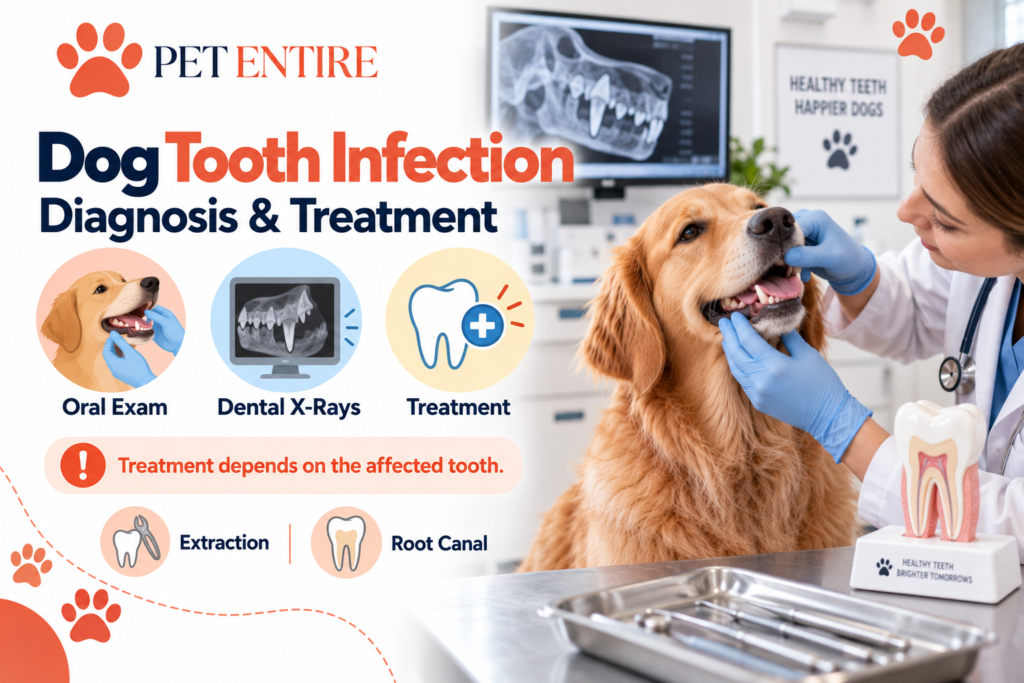
How Do Vets Diagnose a Tooth Infection in Dogs?
Diagnosis starts with a physical and oral examination. The veterinarian may identify gum inflammation, fractures, swelling, abnormal teeth, or other visible clues.
A complete assessment often requires dental radiographs under anesthesia because important disease can exist beneath the gumline. Radiographs help evaluate tooth roots, surrounding bone, and structures that cannot be assessed reliably from the surface.
Physical and Oral Examination
Your veterinarian will first assess your dog’s overall condition and inspect the mouth. They may look for swelling, gum inflammation, broken teeth, abnormal odor, bleeding, or other abnormalities.
This initial examination helps identify suspicious areas. It may also determine whether a more detailed dental procedure is needed.
Checking the Gums and Teeth
The veterinarian can assess gum health, tooth stability, visible fractures, tartar, and other changes. They may also evaluate the tissues surrounding individual teeth.
A visual examination is useful, but it has limitations. Disease beneath the gumline can remain hidden, particularly when the tooth itself looks normal.
Dental X-Rays
Dental X-rays provide information that cannot be obtained by simply looking at the teeth. They can reveal changes around roots, bone loss, fractures, and other abnormalities beneath the gumline.
AAHA emphasizes that more than half of a tooth’s structure is below the gumline. Radiographs are therefore an important part of comprehensive veterinary dental assessment.
Evaluating the Tooth Root and Surrounding Bone
When a tooth is infected, the veterinarian needs to know whether the root and nearby bone have been affected. Radiographs can help identify these changes and determine how extensive the problem is.
The findings can influence whether extraction, root canal treatment, or another approach is appropriate. The condition of the tooth and surrounding periodontal tissues both matter.
Why Dental Diagnosis May Require Anesthesia
A complete dental assessment often requires general anesthesia because the veterinary team needs safe access to the entire mouth. It also allows thorough probing, cleaning, and dental radiography without the movement and stress of an awake procedure.
Anesthesia is planned around the individual patient. Veterinary teams may perform pre-anesthetic testing and monitor the patient throughout the procedure to reduce avoidable risks.
How Is a Tooth Infection in Dogs Treated?
Treatment depends on the tooth, the cause, and the extent of damage. An infected tooth may require extraction or root canal therapy. Periodontal disease may require professional cleaning and treatment of affected teeth and supporting tissues.
Antibiotics can be useful in selected situations, but they aren’t a substitute for treating the underlying dental problem. For a tooth-root abscess, definitive treatment generally involves either extraction or root canal therapy.
Tooth Extraction
Extraction removes the affected tooth and its diseased structures. It may be recommended when the tooth is too damaged to preserve or when surrounding tissues have significant disease.
Dogs generally adapt well after appropriate dental extractions. Your veterinarian will provide specific instructions for food, activity, medication, and follow-up during recovery.
Root Canal Treatment
Root canal therapy removes infected or damaged pulp while preserving the tooth. It can be an option for selected teeth when saving their structure is appropriate.
Not every damaged tooth is a good candidate. Dental X-rays, the extent of the injury, periodontal health, and the condition of the surrounding bone all influence the decision.
Pain Relief and Anti-Inflammatory Medication
Dental disease can be painful even when a dog appears outwardly calm. Your veterinarian may prescribe appropriate pain relief or anti-inflammatory medication based on the diagnosis and your dog’s health.
Never give human pain medication without veterinary direction. Drugs that are commonly used by people can cause serious problems in dogs.
Antibiotics for Dental Infection
Antibiotics may be appropriate in certain dental infections, particularly when the veterinarian identifies a reason for systemic antimicrobial treatment. Their use should be based on the individual case.
For a tooth-root abscess, antibiotics alone do not remove the infected or damaged tooth. Definitive dental treatment is usually required to address the underlying source.
Dental Cleaning and Treatment of Periodontal Disease
Professional dental cleaning removes plaque and calculus from areas that home brushing cannot fully reach. A comprehensive procedure also allows the veterinary team to examine the gumline and assess individual teeth.
Treatment varies with disease severity. Some dogs need routine professional cleaning, while advanced periodontal disease may require extraction or more specialized dental care.
Can You Treat a Dog Tooth Infection at Home?
There is no reliable home treatment that can remove an established infection inside a tooth. You can keep your dog comfortable while arranging veterinary care, but attempting to drain swelling, pull a tooth, or apply irritating substances can cause additional injury.
If chewing hurts, avoid hard bones, antlers, and rigid chew toys until your dog has been assessed. Follow any specific instructions provided by your veterinary team.
What You Can Do While Waiting for the Vet
Keep fresh water available and follow the veterinarian’s instructions if you have already received them. If your dog struggles with hard food, ask your veterinary team whether a temporary softer diet is appropriate.
Avoid pressing on swollen areas or repeatedly opening a painful mouth. Even a normally gentle dog may react defensively when experiencing significant oral pain.
What Not to Give Your Dog
Don’t use leftover antibiotics, another pet’s prescription medication, or unapproved supplements to treat a suspected dental infection.
Treatment depends on the actual diagnosis. Giving the wrong medication can delay appropriate care or create additional health risks.
Why Human Painkillers Can Be Dangerous
Human pain medicines aren’t automatically safe for dogs. Some can cause serious gastrointestinal, kidney, liver, or other toxic effects depending on the drug and dose.
Never try to calculate a human medication dose for your dog yourself. A veterinarian can recommend an appropriate pain-management plan based on your dog’s health and circumstances.
Why Home Remedies Cannot Cure an Infected Tooth
Brushing and rinsing can support oral hygiene, but they cannot remove infected tissue from inside a damaged tooth. The same applies to household remedies marketed as cures for dental infections.
When bacteria have reached the pulp or root, the underlying source needs veterinary assessment. Extraction or root canal therapy may be necessary.
What Happens After Treatment?
Recovery depends on the procedure performed. Dogs recovering from extraction or other dental treatment may need temporary changes to food, chewing activity, and medication.
Follow the discharge instructions provided by your veterinary team. Contact the clinic if swelling, bleeding, pain, or appetite problems become worse instead of gradually improving.
Feeding Your Dog After Dental Treatment
Your veterinarian may recommend softer food for a period after certain dental procedures. The appropriate diet and duration depend on the treatment performed.
Avoid hard chewing until your veterinarian says it is safe. Once the mouth has healed, many dogs can return to their normal diet and activity.
Managing Pain During Recovery
Pain control is an important part of veterinary dental care. Your veterinarian may prescribe medication to keep your dog comfortable during healing.
Watch for worsening discomfort, persistent bleeding, increasing swelling, or refusal to eat. These changes deserve a call to the veterinary team.
Preventing Your Dog From Chewing Hard Objects
Extremely hard objects can fracture teeth. Bones, antlers, ice, and very rigid chew toys can create substantial forces on canine teeth and large cheek teeth.
Choose dental chews carefully and consider your dog’s size, chewing style, and dental history. Ask your veterinarian about suitable options if your dog has previously fractured a tooth.
Follow-Up Dental Care
Follow-up appointments allow the veterinarian to check healing and address any remaining dental disease. Some treatments, such as root canal therapy, may require follow-up dental radiographs.
Ongoing care is also important because treating one infected tooth doesn’t prevent other teeth from developing periodontal disease or trauma-related problems.
Signs the Infection May Be Returning
Watch for renewed bad breath, facial swelling, chewing changes, drooling, food dropping, or sensitivity around the mouth.
A return of symptoms doesn’t necessarily mean the same tooth is infected again. It could indicate another dental problem, which is why a veterinary examination is more useful than trying to diagnose the cause at home.
How Can You Prevent Tooth Infections in Dogs?
Regular dental care can reduce plaque accumulation and help identify problems before they become advanced. Daily brushing with a dog-specific toothbrush and toothpaste is an important part of home dental care.
Professional dental examinations are also valuable because some disease develops beneath the gumline. Appropriate dental chews, veterinary dental products, and dental diets may provide additional support when they suit the individual dog.
Brush Your Dog’s Teeth Regularly
Daily brushing helps remove plaque before it hardens into calculus. Use toothpaste made specifically for dogs rather than human toothpaste.
If your dog dislikes brushing, start gradually. Let your dog become comfortable with the toothbrush and toothpaste before trying to clean the entire mouth.
Use Dog-Safe Dental Products
Dental products vary in quality and purpose. Choose products designed for dogs and follow size and chewing recommendations.
The Veterinary Oral Health Council seal can help owners identify products that have met specific standards for dental claims. Your veterinarian can also recommend options suited to your dog.
Schedule Regular Veterinary Dental Exams
Routine veterinary examinations help identify gum disease, fractured teeth, loose teeth, and other oral problems. The appropriate frequency depends on your dog’s age, dental health, breed, and individual risk factors.
A professional dental procedure may be recommended when disease requires treatment beneath the gumline. Veterinary dentistry can combine examination, radiographs, cleaning, and necessary treatment during the same anesthetized procedure.
Choose Appropriate Dental Chews
Dental chews can help mechanically reduce some plaque, but extremely hard products can damage teeth. The goal is to balance dental benefit with fracture risk.
Products carrying the Veterinary Oral Health Council seal may provide a useful starting point. Still, your veterinarian can help determine which products make sense for your dog’s mouth and chewing habits.
Watch for Broken or Damaged Teeth
Check your dog’s teeth periodically if your dog allows it safely. Look for obvious fractures, unusual discoloration, bleeding, or changes around the gums.
A damaged tooth deserves attention even when your dog seems comfortable. Dogs can compensate for dental pain, and deeper injury may not be obvious from the visible portion of the tooth.
Dog Tooth Infection vs. Other Common Mouth Problems
Several oral conditions can produce similar symptoms. Bad breath, red gums, drooling, chewing changes, and discomfort can occur with gingivitis, periodontal disease, fractured teeth, or an infected root.
The differences are useful for understanding what your veterinarian may be looking for. They aren’t a substitute for diagnosis because multiple dental problems can occur in the same mouth.
Tooth Infection vs. Gingivitis
Gingivitis primarily affects the gums and commonly causes redness, swelling, and bleeding. It often develops in response to plaque accumulation.
A deeper tooth infection involves the tooth or tissues around its root. Gingivitis can progress into periodontal disease if plaque and inflammation remain unmanaged.
Tooth Infection vs. Periodontal Disease
Periodontal disease affects the supporting tissues around teeth. As it progresses, it can cause attachment loss, bone damage, loose teeth, and significant oral inflammation.
A root infection is more specifically associated with an individual tooth and its internal or surrounding structures. The two conditions can occur together, so a complete dental assessment may be needed.
Tooth Infection vs. Broken Tooth
A broken tooth describes physical damage. Infection describes bacterial involvement of the tooth or surrounding tissues.
The two problems can be connected. A deep fracture may expose the pulp and create a pathway for bacteria, eventually leading to infection around the root.
Tooth Infection vs. Tooth Abscess
A tooth abscess is a localized collection of pus associated with infection. A tooth infection may develop without producing an obvious external abscess.
When an abscess occurs around a root, swelling or drainage may appear. Dental radiographs can help confirm the location and extent of the infection.;
Frequently Asked Questions About Dog Tooth Infections:
What are the first signs of a tooth infection in a dog?
Persistent bad breath may be an early clue. Other signs include red or swollen gums, drooling, chewing changes, dropping food, facial rubbing, or sensitivity around the mouth. These symptoms can also occur with other dental conditions, so they don’t confirm an infection by themselves.
Can a dog tooth infection heal on its own?
An established infection inside a tooth shouldn’t be expected to resolve without veterinary treatment. Symptoms can sometimes change temporarily, but the damaged tooth or infected root may remain. A veterinarian can determine whether the tooth needs extraction, root canal treatment, or another form of dental care.
How do I know if my dog has a tooth abscess?
Facial swelling, mouth pain, bad breath, chewing difficulty, and drainage can occur with a tooth-root abscess. Upper tooth infections may cause swelling beneath the eye. However, some abscesses have few visible signs. Dental X-rays are generally needed to definitively diagnose a tooth-root abscess.
Can a dog tooth infection make them sick?
It can contribute to pain and inflammation, and severe dental disease can have broader health implications. However, not every infected tooth causes obvious whole-body illness. If your dog develops marked lethargy, poor appetite, facial swelling, or other concerning symptoms, veterinary assessment is appropriate.
Can a dog tooth infection cause facial swelling?
Yes. Infection around a tooth root can extend into nearby tissues and cause localized swelling. Upper cheek teeth are particularly associated with swelling beneath the eye because of their anatomy. Facial swelling should be evaluated by a veterinarian rather than treated with home remedies.
Can antibiotics cure a dog tooth infection?
Antibiotics may help control bacterial infection in selected cases, but they don’t repair a damaged tooth or remove infected tissue inside it. For a tooth-root abscess, definitive treatment generally involves extraction or root canal therapy. Your veterinarian determines whether antibiotics are appropriate for the individual case.
How much does it cost to treat a dog tooth infection?
The cost varies across the United States and depends on the examination, dental X-rays, anesthesia, number of affected teeth, extraction difficulty, medications, and whether specialist care is required. A veterinary clinic can provide a more accurate estimate after examining your dog and reviewing the dental findings.
How long can a dog live with an infected tooth?
There isn’t a reliable timeframe because dental infections vary in severity and location. A dog may continue eating while experiencing significant oral pain. Delaying care can allow dental damage to progress, so a suspected infected tooth should be assessed rather than monitored indefinitely.
Can I treat my dog’s tooth infection at home?
No home remedy can reliably remove an infection inside a tooth. You can keep your dog comfortable while arranging veterinary care, but don’t drain swelling, pull a tooth, or give human pain medication. Veterinary treatment is needed when infection involves the tooth root or deeper tissues.
Should I take my dog to the emergency vet for a tooth infection?
Not every infected tooth requires an emergency hospital visit. Prompt veterinary care is appropriate for suspected dental infection, while emergency care is warranted when severe signs such as breathing difficulty, swallowing problems, collapse, severe weakness, or rapidly worsening swelling occur.
Can a dog still eat with an infected tooth?
Yes. Some dogs continue eating despite significant dental pain because they adapt their chewing or tolerate discomfort. Others drop food, chew slowly, prefer softer food, or avoid hard treats. Eating normally doesn’t rule out a painful tooth or hidden dental disease.
How can I prevent tooth infections in my dog?
Regular toothbrushing, appropriate dog-safe dental products, routine veterinary dental examinations, and avoiding extremely hard chew objects can reduce dental risks. Early evaluation of broken or discolored teeth also helps prevent untreated dental problems from progressing.
Key Takeaway
A dog tooth infection can cause bad breath, gum changes, chewing difficulty, drooling, facial swelling, or behavioral changes, but symptoms alone cannot confirm the cause. If you notice these signs, arrange a veterinary dental examination. Dental X-rays may be needed to find problems hidden below the gumline, while treatment depends on the affected tooth and severity of disease.
| Dental problem | Common clues | Typical next step |
| Gingivitis | Red, swollen, or bleeding gums | Veterinary dental assessment and oral-care plan |
| Periodontal disease | Bad breath, gum changes, loose teeth | Professional dental evaluation and treatment |
| Fractured tooth | Visible crack, chip, discoloration, chewing changes | Veterinary examination and possible dental imaging |
| Tooth-root infection | Pain, bad breath, swelling, chewing changes | Dental X-rays and definitive treatment |
| Tooth-root abscess | Facial swelling, drainage, pain | Prompt veterinary assessment and dental treatment |
Related Pet Health Guides
Looking for answers to other common pet-health questions? Explore these PetEntire guides:
- Can Dogs Have Cinnamon? — Learn whether cinnamon is safe for dogs, what amounts may cause problems, and which cinnamon-containing foods you should avoid sharing with your pet.
- Can Dogs Eat Turkey? — Find out whether dogs can safely eat turkey, which parts and seasonings can be risky, and how to serve it safely.
- Why Is My Cat Vomiting? — Learn about common causes of vomiting in cats, what different symptoms may mean, and when vomiting requires veterinary attention.