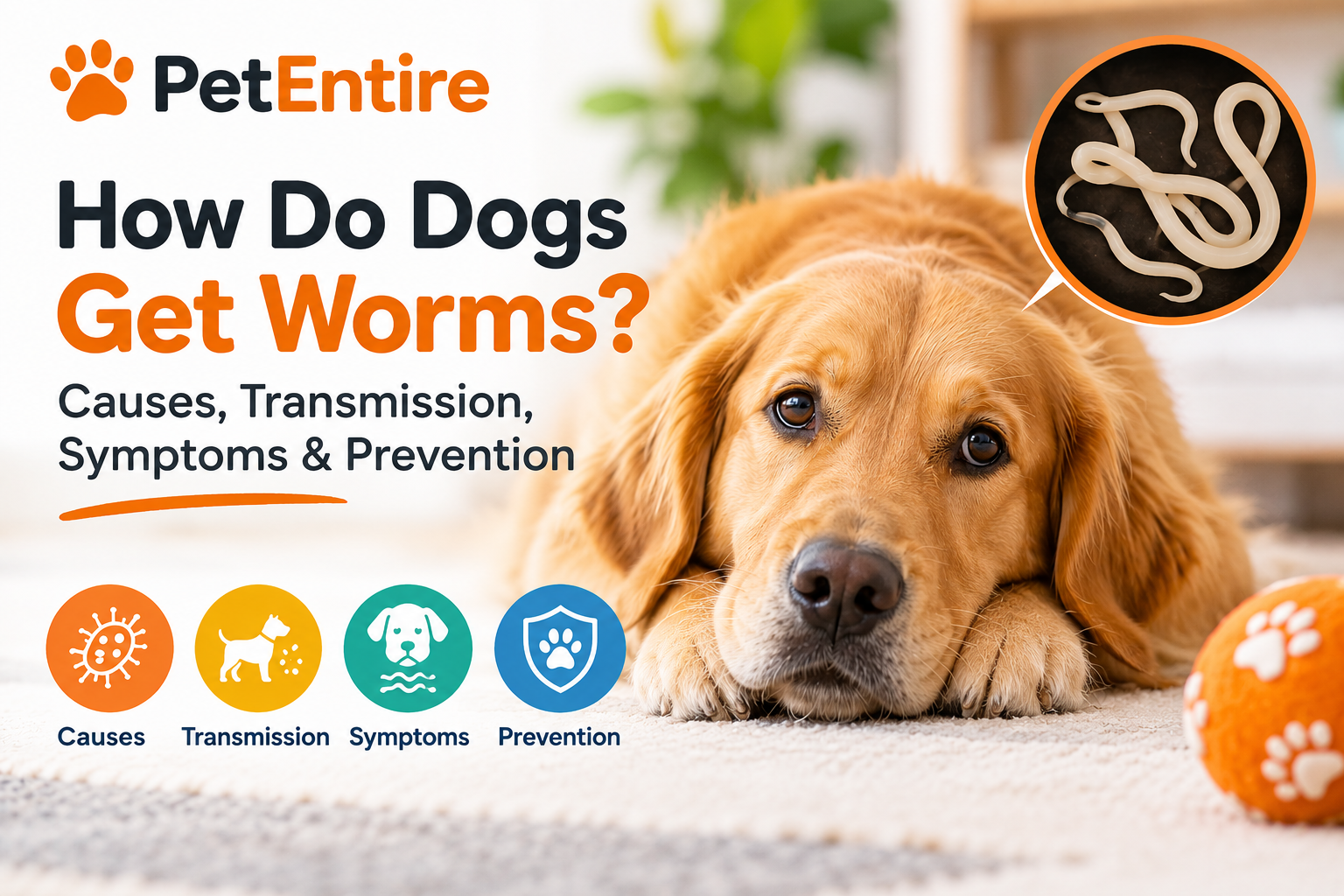
How do dogs get worms? Dogs can pick up different types of worms through contaminated feces, soil, fleas, infected prey, raw or undercooked animal material, and other exposure routes. Puppies can also acquire certain parasites from their mothers before birth or while nursing. Heartworms are different because they spread through mosquito bites rather than direct contact with infected feces.
The route of infection depends heavily on the parasite. Roundworms, hookworms, whipworms, tapeworms, and heartworms do not all use the same life cycle. Understanding those differences makes it easier to recognize risks, discuss prevention with your veterinarian, and reduce the chance of reinfection.
Quick Answer
Dogs can get worms by swallowing parasite eggs or larvae, contacting contaminated feces or soil, eating infected fleas or prey, consuming contaminated food or water, or acquiring certain parasites from their mother. Mosquitoes transmit heartworms. Puppies are especially vulnerable to some intestinal parasites because transmission can occur before birth or during nursing. The exact route depends on the type of worm involved.
| Exposure | Possible parasite risk | Key point |
| Infected feces | Some intestinal worms | Prompt waste removal matters |
| Contaminated soil | Certain worm eggs or larvae | Outdoor exposure can matter |
| Fleas | Tapeworms | Flea control helps prevent infection |
| Infected prey | Tapeworms and other parasites | Hunting increases exposure |
| Mosquitoes | Heartworms | Appropriate prevention is essential |
| Mother to puppy | Certain intestinal worms | Puppies need veterinary-guided parasite care |
How Do Dogs Get Worms?
The simplest answer is that dogs become infected when they encounter the infectious stage of a parasite and take it into their body. That might mean swallowing worm eggs, larvae, an infected flea, or infected prey. For some parasites, the infectious stage can persist in the environment long after the original animal has left.
That is why dog worm transmission isn’t limited to direct contact between dogs. A dog can encounter parasites in a yard, kennel, park, hunting area, or contaminated environment without ever playing with an infected dog.
Eating Worm Eggs or Larvae
Some intestinal worms spread when dogs swallow microscopic eggs or larvae. A dog may ingest them while grooming after walking through contaminated ground, eating something from the ground, or licking contaminated surfaces.
Roundworms and whipworms are important examples. Their eggs can enter the environment through infected dog feces. Some roundworm eggs become infective after developing in the environment, while whipworm eggs can remain viable for long periods under suitable conditions.
Contact With Contaminated Soil or Feces
Contaminated soil can become a source of infection when infected animals leave parasite eggs or larvae behind. Dogs may encounter these stages while digging, sniffing, licking their paws, or eating material from the ground.
However, simply touching grass does not mean a dog will get worms. Transmission depends on the parasite, whether its infectious stage is present, and how the dog is exposed.
Eating Infected Animals, Fleas, or Raw Meat
Dogs that hunt or scavenge have additional exposure risks. Some tapeworms use fleas or prey animals as part of their life cycle. A dog can become infected by swallowing an infected flea or eating an infected animal. Certain tapeworm species are also associated with raw animal tissues or offal.
This is one reason outdoor dogs, hunting dogs, and dogs that frequently catch rodents or wildlife may face different parasite risks from dogs with limited outdoor exposure.
What Types of Worms Can Dogs Get?
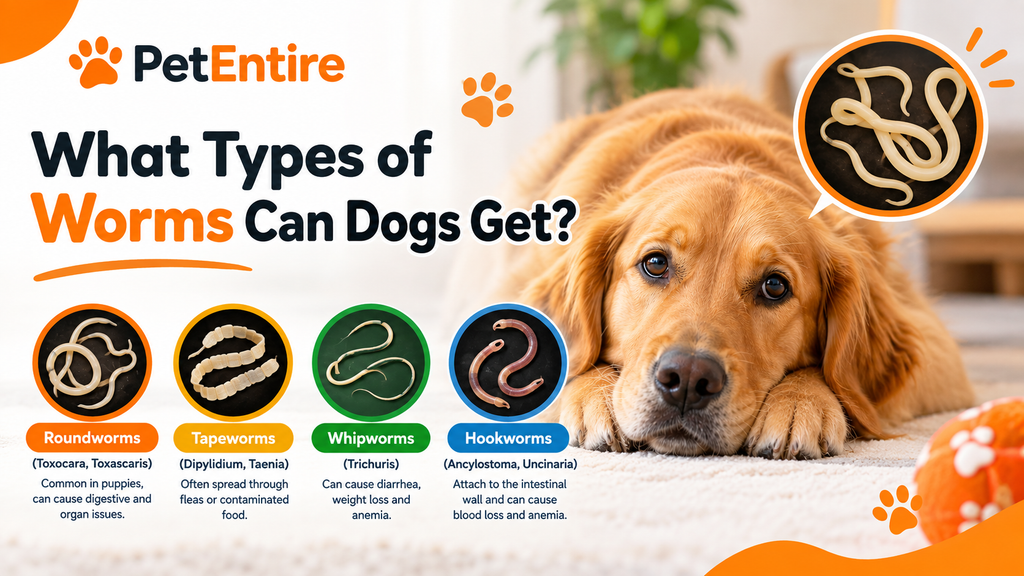
When people talk about common worms in dogs, they usually mean several different groups of parasites rather than one disease. Roundworms, hookworms, whipworms, and tapeworms can affect the gastrointestinal tract, while heartworms have a very different life cycle and primarily affect the cardiovascular and respiratory systems.
Roundworms
Roundworms are intestinal parasites that can affect dogs of different ages, although puppies are particularly susceptible. Dogs can acquire some roundworms by swallowing infective eggs, while Toxocara canis can also pass from an infected mother to her puppies before birth or through nursing.
Infected puppies may develop a swollen abdomen, poor growth, diarrhea, or worms in vomit or stool. Some dogs show no obvious signs, so symptoms alone cannot rule out infection.
Hookworms
Hookworms are small intestinal parasites that attach to the intestinal lining and feed on blood. Dogs can become infected through environmental exposure to larvae, and certain canine hookworms can also use other transmission routes.
Heavy infections can cause anemia, weakness, weight loss, or diarrhea. Puppies can be especially vulnerable to severe disease. Some canine hookworms are also zoonotic parasites, meaning they can cause disease in people.
Whipworms
Whipworms live mainly in the large intestine. Dogs become infected by swallowing mature eggs from contaminated environments. Unlike some parasites, whipworm eggs need time in the environment before becoming infective.
Light infections may cause few signs. Heavier infections can lead to diarrhea, weight loss, blood in the stool, and anemia. Their ability to persist in the environment makes sanitation and prevention particularly important.
How Do Dogs Get Tapeworms?
Tapeworms have a different transmission pattern from many intestinal worms. Dogs commonly acquire certain tapeworms by eating an infected flea or consuming infected prey. This means a dog can develop a tapeworm infection without directly eating another dog’s feces.
Tapeworm infections are often mild, but visible segments around the anus or in the stool can provide an important clue. Accurate identification matters because treatment and prevention depend on the particular parasite involved.
Fleas and Tapeworm Infection
One of the best-known routes involves Dipylidium caninum, a tapeworm that uses fleas as an intermediate host. A dog becomes infected after swallowing an infected flea during grooming.
Therefore, treating the tapeworm without controlling fleas can allow reinfection. Effective flea prevention is an important part of controlling flea-associated tapeworms.
Eating Infected Rodents or Other Animals
Dogs that hunt can encounter tapeworm larvae in rodents and other prey. Rural dogs, hunting dogs, and dogs allowed to roam may therefore face greater exposure than dogs that stay indoors or in controlled areas.
Stopping access to prey can reduce this risk. Your veterinarian can also recommend parasite prevention based on your dog’s lifestyle.
Tapeworm Segments in Dog Feces
Tapeworm segments can sometimes look like small grains of rice or cucumber seeds around the anus, on bedding, or in fresh dog stool. Finding segments is useful information, but not every unusual object in stool is a tapeworm.
If you see suspicious material, take a photograph or bring a sample to your veterinarian. A veterinary examination can help determine whether treatment is needed.
How Do Puppies Get Worms?
How do puppies get worms? Puppies can acquire certain intestinal parasites before birth, during nursing, or after they begin exploring their environment. This makes puppy parasite control different from simply treating an adult dog after an infection appears.
Some parasites can cause significant illness in young puppies, particularly when infections are heavy. Veterinary-guided deworming and preventive care are therefore important parts of routine puppy health.
Worms Passed From Mother to Puppies
Certain roundworms can pass from an infected mother to her puppies before birth. Puppies can also acquire some parasites during nursing.
This explains why worms in newborn puppies can occur even when the puppies have had little or no outdoor exposure. Maternal parasite control and veterinary care can help reduce this risk.
Nursing and Environmental Exposure
After birth, puppies can encounter parasites through their surroundings. Contaminated bedding, soil, feces, and other environmental sources can become exposure points as puppies become more active.
Young puppies also explore the world with their mouths. That behavior can make swallowing contaminated material easier.
Why Puppies Have a Higher Risk of Worm Infection
Puppies can develop heavier parasite burdens than healthy adult dogs and may become sick more quickly. Roundworms and hookworms, in particular, can cause significant problems in young animals.
Signs can include poor growth, diarrhea, vomiting, a distended abdomen, weakness, or anemia. Not every infected puppy shows obvious symptoms, which is why veterinary parasite screening and prevention matter.
Can Dogs Get Worms From Other Dogs?
Yes, dogs can get some intestinal worms from environments contaminated by infected dogs. But saying that worms simply “spread from dog to dog” oversimplifies the process.
Often, the real route is dog → feces → environment → another dog. The second dog then swallows infectious eggs or larvae while exploring or grooming. Some parasites use completely different routes, such as fleas or mosquitoes.
Contact With Infected Dog Feces
Dogs can encounter parasite eggs or larvae in infected feces. Even when feces are no longer visible, contamination may remain in the surrounding environment.
This is why picking up dog waste quickly is more than a courtesy. It is an important part of reducing parasite transmission and protecting other dogs and people.
Contaminated Kennels, Yards, and Soil
Shared yards, kennels, dog parks, and other outdoor areas can become contaminated when infected animals shed parasite stages. The risk varies considerably by parasite because eggs and larvae differ in how they develop and survive.
A clean-looking yard isn’t necessarily parasite-free. Good sanitation should be combined with veterinary-recommended parasite prevention.
Why Picking Up Dog Waste Matters
Prompt feces removal interrupts the parasite life cycle before some eggs or larvae can mature and contaminate a larger area. It also reduces human exposure to certain zoonotic parasites.
The CDC recommends picking up pet poop promptly, disposing of it properly, and washing hands after handling animal waste.
Can Dogs Get Worms From the Environment?
Yes. Soil and other outdoor environments can become reservoirs for certain parasite eggs or larvae. The risk depends on the parasite’s life cycle, environmental conditions, contamination level, and the dog’s behavior.
A dog that spends lots of time outdoors, digs, hunts, scavenges, or visits heavily used dog areas may have different exposure risks from a dog that spends most of its time indoors.
Contaminated Soil and Grass
Dogs can encounter parasite eggs or larvae in contaminated soil or grass. They may then swallow them while licking their paws or eating material from the ground.
This does not mean that every patch of grass contains worms. Infection requires exposure to an appropriate infectious parasite stage.
Dog Parks and Shared Outdoor Areas
Dog parks can provide opportunities for exposure because many animals share the same environment. The risk is influenced by sanitation, waste removal, local parasite prevalence, and how frequently infected animals contaminate the area.
You don’t need to avoid every dog park. Instead, combine sensible hygiene with a parasite-prevention plan appropriate for your dog’s lifestyle.
How Long Worm Eggs Can Remain in the Environment
Some parasite eggs are remarkably persistent. For example, CDC information notes that Toxocara eggs can survive for months or even years under suitable environmental conditions. Whipworm eggs can also persist for years under favorable conditions.
That persistence explains why removing feces and maintaining appropriate parasite control are so valuable. Once an environment becomes heavily contaminated, simply waiting a few days may not eliminate the risk.
Can Dogs Get Worms From Fleas and Other Parasites?
Some parasites depend on vectors or intermediate hosts rather than direct fecal exposure. Fleas can transmit certain tapeworms, while mosquitoes transmit heartworms.
This distinction matters because preventing intestinal worms alone does not necessarily protect a dog from every important parasite.
Fleas and Tapeworms
Dogs can get tapeworms by swallowing infected fleas during grooming. Flea infestations can therefore create a pathway for tapeworm infection even when a dog rarely leaves home.
If your dog has a flea-associated tapeworm, flea control is an essential part of preventing another infection.
Mosquitoes and Heartworm Transmission
Heartworm is different from the common intestinal worms discussed above. Dogs acquire heartworm through the bite of an infected mosquito. The parasite develops through stages in the dog and can eventually affect the heart, lungs, and associated blood vessels.
Because heartworm disease can become severe, preventive medication and routine veterinary testing are important parts of canine preventive care.
Why Parasite Prevention Needs to Cover More Than Intestinal Worms
A dog may face several parasite risks at once. A product or strategy that controls one parasite does not automatically protect against every other parasite.
Your veterinarian can recommend prevention based on age, location, lifestyle, travel, hunting behavior, flea exposure, and other risk factors.
Can Dogs Get Worms From Eating Things?
Yes. Eating certain things can expose dogs to parasites. Hunting, scavenging, eating feces, consuming infected prey, and ingesting contaminated material can all create different risks.
The important point is that not every type of food or outdoor material transmits every worm. The parasite’s life cycle determines whether a particular exposure can cause infection.
Eating Infected Rodents or Wildlife
Rodents and wildlife can serve as hosts for certain parasites. A dog that catches and eats prey may therefore encounter parasites that are uncommon in dogs with controlled diets.
If your dog regularly hunts, tell your veterinarian. Lifestyle information can influence which parasite tests and preventive measures are appropriate.
Eating Animal Feces
Dogs that eat animal feces can encounter parasite eggs or other infectious organisms. This behavior, sometimes called coprophagia, can therefore contribute to parasite exposure depending on what was eaten.
Don’t assume that every episode of poop eating will result in worms. The risk depends on the animal involved and whether infectious parasite stages are present.
Raw or Undercooked Meat
Raw animal tissues can contain certain parasite stages. Dogs that eat raw meat, offal, or hunted prey may therefore have exposure risks that differ from dogs eating commercially prepared diets.
If your dog eats raw animal material regularly, discuss parasite prevention and food safety with your veterinarian.
Drinking Contaminated Water
Untreated or contaminated water can carry various infectious organisms, although not every water source transmits intestinal worms. Puddles, stagnant water, livestock areas, and water contaminated by animal feces may present broader parasite or infectious-disease risks.
Fresh, clean drinking water is the safer choice.
What Are the Signs of Worms in Dogs?
Signs of worms in dogs vary according to the parasite, infection burden, age, and overall health. Some infected dogs show few or no obvious symptoms.
Possible signs include digestive upset, poor growth, weight loss, diarrhea, vomiting, a swollen abdomen, visible worms or segments in stool, anemia, or respiratory signs with certain parasites. None of these symptoms proves that worms are responsible.
Worms in Dog Poop
You may sometimes see adult worms or tapeworm segments in dog feces. Roundworms can resemble pale, spaghetti-like worms, while tapeworm segments may look like small rice grains.
Many parasite infections cannot be identified by simply looking at stool. Microscopic testing may be necessary, and some parasites are difficult to detect on a single fecal examination.
Vomiting, Diarrhea, or Soft Stool
Intestinal parasites can contribute to vomiting, diarrhea, soft stool, abdominal discomfort, or changes in appetite. These symptoms are not specific to worms, though.
Dietary changes, infections, gastrointestinal disease, toxins, and other conditions can produce similar signs. Persistent digestive symptoms deserve veterinary assessment.
Weight Loss, Poor Growth, or a Potbelly
Heavy roundworm infections can contribute to poor growth and a distended abdomen in puppies. Other parasites may contribute to weight loss or poor body condition.
A potbelly puppy does not automatically have worms. Your veterinarian should determine whether parasites, nutrition, gastrointestinal disease, or another condition is responsible.
Coughing or Breathing Problems With Certain Parasites
Some parasites have life cycles that involve migration through tissues or affect the respiratory system. Heartworm disease can also cause serious respiratory and cardiovascular problems.
Coughing or breathing difficulty should never be assumed to mean worms. Breathing problems, especially severe or sudden ones, warrant prompt veterinary attention.
How Do You Know What Type of Worm Your Dog Has?
The appearance of symptoms rarely identifies the exact parasite. Several different infections can cause diarrhea, weight loss, vomiting, or poor growth.
A veterinarian may combine your dog’s history and physical examination with fecal testing or other diagnostic methods. The right test depends on the suspected parasite and the dog’s circumstances.
Fecal Examination
A fecal examination can detect eggs, larvae, cysts, or other evidence of intestinal parasites. Veterinarians may use microscopic examination and additional techniques depending on the suspected infection.
A negative test does not necessarily prove that a dog has no parasites. Some parasites are shed intermittently or may require specialized testing.
Identifying Worms or Segments in Stool
If you see something unusual in your dog’s stool, photograph it before disposing of it. A fresh sample may also be useful if your veterinarian asks you to bring one.
Visible material can provide clues, but identification should be confirmed professionally rather than based on online photographs alone.
Why Symptoms Alone Cannot Identify the Worm
Vomiting, diarrhea, weight loss, coughing, and a swollen abdomen have many possible causes. Even visible worms do not always tell you the complete parasite picture.
That’s why a veterinary examination and appropriate testing are more reliable than treating based solely on symptoms.
How Are Worms Treated in Dogs?
There is no single deworming medicine that is appropriate for every parasite. Treatment depends on which parasite is present, how severe the infection is, the dog’s age and health, and whether reinfection is likely.
Some preventive products also control particular intestinal parasites, while others target different parasite groups. Your veterinarian can select an appropriate treatment plan after identifying the risk or infection.
Deworming Medication
Dog deworming uses antiparasitic medications designed to target specific parasites. The appropriate drug depends on the worm involved.
Don’t give a human dewormer or use another animal’s medication without veterinary guidance. Different products have different active ingredients, indications, safety considerations, and parasite coverage.
Treatment Depends on the Type of Worm
A tapeworm infection associated with fleas requires a different management approach from heartworm disease or whipworm infection. Some parasites also require environmental control to reduce reinfection.
For that reason, guessing the parasite and choosing medication from a generic list can lead to incomplete treatment.
Why Follow-Up Testing May Be Needed
Your veterinarian may recommend repeat testing when an infection is persistent, severe, difficult to detect, or likely to recur. Follow-up can help determine whether treatment worked and whether additional exposure is occurring.
Persistent infection after treatment can sometimes reflect reinfection rather than medication failure.
How Can You Prevent Your Dog From Getting Worms?
The best approach combines parasite prevention with sensible hygiene and exposure control. No single strategy eliminates every parasite risk because different worms have different life cycles.
Your veterinarian can tailor prevention to your dog’s age, health, geographic location, lifestyle, travel, hunting behavior, and exposure to fleas or mosquitoes.
Use Veterinary-Recommended Parasite Prevention
Ask your veterinarian which preventive products cover the parasites relevant to your dog. Heartworm prevention is particularly important because mosquitoes can transmit the parasite, while some products also protect against selected intestinal worms.
Follow the product instructions and veterinary recommendations rather than creating a deworming schedule based on guesswork.
Pick Up Dog Feces Promptly
Prompt waste removal reduces environmental contamination. This is especially valuable for parasites whose eggs or larvae develop in soil after being shed in feces.
The CDC recommends picking up pet waste promptly and washing hands after handling it.
Prevent Fleas and Hunting
Flea control reduces the risk of flea-associated tapeworm infection. Preventing access to rodents and wildlife can also reduce exposure to parasites carried by prey animals.
If your dog frequently hunts, scavenges, or roams, mention that behavior during veterinary visits.
Keep Puppies on an Appropriate Deworming Plan
Puppies have special parasite risks because some worms can pass from mother to puppy. Your veterinarian can establish an age-appropriate puppy deworming and parasite-prevention plan.
Don’t rely on a generic online schedule because recommendations can vary with the dog’s health, location, parasite risk, and preventive products.
Can Humans Get Worms From Dogs?
Yes, some canine parasites can infect people. These are called zoonotic parasites. The risk varies substantially by parasite and transmission route.
Roundworms and hookworms are important examples. People can encounter infectious stages through contaminated environments or animal feces, while certain tapeworms can infect people through accidental ingestion of an infected flea.
How Dog Parasites Can Affect People
Human infection does not usually happen simply because someone pets a dog. The route depends on the parasite.
For example, Toxocara infections can occur when people accidentally ingest soil or food contaminated with roundworm eggs. Certain canine hookworm larvae can penetrate exposed human skin from contaminated soil or sand.
Children and Higher-Risk Environmental Exposure
Children may have greater environmental exposure because they often play on the ground and may put contaminated hands or objects in their mouths. This does not mean families with dogs should be fearful.
Good hygiene, prompt feces removal, veterinary parasite control, and sensible supervision greatly reduce avoidable exposure.
How Good Hygiene Reduces Transmission Risk
Wash your hands after handling pet waste and before eating. Pick up dog feces promptly, keep children’s play areas away from contaminated waste, and follow your veterinarian’s parasite-prevention recommendations.
If someone in your household develops symptoms after a possible parasite exposure, speak with a healthcare professional and mention the relevant animal exposure.
Frequently Asked Questions About Worms in Dogs
How do dogs get worms in the first place?
Dogs can acquire worms through several routes. Depending on the parasite, they may swallow eggs or larvae from contaminated environments, eat infected fleas or prey, consume contaminated material, or acquire certain parasites from their mother. Heartworms are different because mosquitoes transmit them. The exact route depends on the parasite’s life cycle.
Can dogs get worms from other dogs?
Dogs can acquire certain worms from environments contaminated by infected dogs. The usual route isn’t simply touching another dog. Instead, infected feces can contaminate soil, grass, kennels, or shared areas, where parasite eggs or larvae may later infect another dog. Some worms, such as tapeworms and heartworms, use different transmission routes.
Can dogs get worms from dog poop?
Yes, depending on the parasite. Infected feces can contain eggs or larvae that contaminate the environment. A dog may later ingest infectious material while sniffing, licking, grooming, or eating from contaminated ground. Prompt feces removal helps interrupt this cycle and also reduces human exposure.
Can dogs get worms from grass or soil?
Dogs can encounter certain parasite eggs or larvae in contaminated soil and grass. However, simply walking across grass does not automatically cause infection. The parasite must be present at an infectious stage, and the dog must have an appropriate exposure. Outdoor risk varies according to the parasite and environment.
Can dogs get worms from fleas?
Yes. Dogs can acquire Dipylidium caninum tapeworms by swallowing infected fleas. This can happen during normal grooming. If fleas are present, treating the tapeworm without addressing the flea infestation can leave the dog vulnerable to reinfection.
Can puppies get worms from their mother?
Yes. Certain roundworms can pass from an infected mother to puppies before birth or through nursing. This is one reason puppies can have intestinal parasites even before significant outdoor exposure. Veterinary-guided deworming and parasite prevention are important during puppyhood.
Can dogs get worms from eating poop?
Dogs can encounter parasite eggs or other infectious organisms by eating feces, particularly when the feces came from an infected animal. The risk depends on the parasite and whether infectious stages are present. Preventing access to feces and cleaning waste promptly can reduce exposure.
How can I tell if my dog has worms?
Visible worms or tapeworm segments can provide a clue, but many infected dogs have no obvious symptoms. Vomiting, diarrhea, weight loss, poor growth, a swollen abdomen, or other changes can have many causes. A fecal examination and veterinary assessment are more reliable than diagnosing worms from symptoms alone.
Can humans get worms from dogs?
Some can. Roundworms, hookworms, and certain tapeworms associated with dogs can infect people, although the transmission routes differ. Good hygiene, prompt removal of dog feces, handwashing, and appropriate veterinary parasite prevention reduce the risk.
Why does my dog keep getting worms?
Repeated infections can happen when the original exposure continues. Fleas, hunting, contaminated environments, prey animals, or persistent parasite stages in soil can contribute to reinfection. The diagnosis may also need to be confirmed because recurring gastrointestinal symptoms aren’t always caused by worms. Your veterinarian can help identify the specific source and prevention strategy.
The Bottom Line
So, how do dogs get worms? There isn’t one answer. Different parasites use different routes. Dogs may swallow eggs or larvae from contaminated environments, eat infected fleas or prey, encounter parasites through feces or soil, acquire certain worms from their mothers, or contract heartworms through mosquito bites.
The most effective protection combines veterinary-recommended parasite prevention, prompt feces removal, flea control, sensible food and environmental practices, and routine veterinary care. If your dog has persistent vomiting or diarrhea, unexplained weight loss, weakness, blood in the stool, breathing problems, or other concerning signs, contact a veterinarian rather than assuming worms are the cause.
Medical disclaimer: This article is for general educational purposes and cannot diagnose or treat an individual dog. Parasite risks and treatment vary by species, location, age, health, and exposure. A veterinarian should evaluate persistent, severe, or concerning symptoms and recommend appropriate testing and treatment.