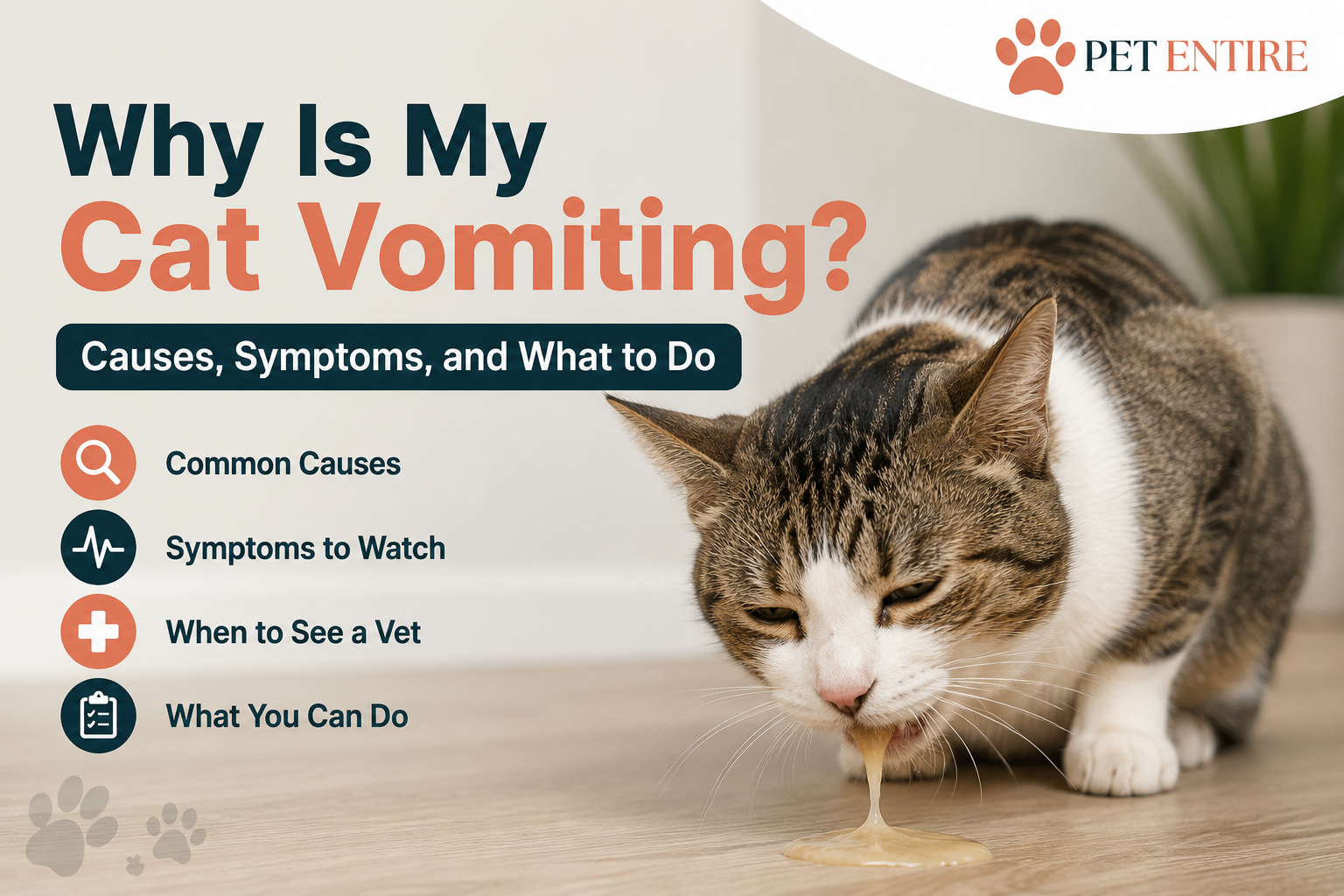
If your cat is vomiting, the cause could be something minor, such as a hairball or eating too quickly. It can also be linked to dietary changes, parasites, gastrointestinal disease, pancreatitis, kidney disease, toxins, or an intestinal blockage. Why is my cat vomiting? The answer depends on how often it happens, what the vomit looks like, when it occurs, and whether your cat has other symptoms.
One isolated episode in an otherwise healthy, alert cat may sometimes be monitored. Repeated vomiting, vomiting with appetite loss or lethargy, blood in the vomit, abdominal pain, dehydration, or suspected poisoning or foreign-object ingestion needs veterinary attention. Vomiting is a symptom rather than a diagnosis, so persistent or severe episodes require a veterinarian to determine the underlying cause.
Quick Answer: Why Is My Cat Vomiting?
Why is my cat vomiting? Common causes include hairballs, eating too quickly, overeating, sudden food changes, food intolerance, parasites, and temporary stomach irritation. More serious cat vomiting causes include gastrointestinal inflammation, pancreatitis, kidney or liver disease, hyperthyroidism, toxins, and foreign objects that cause an intestinal blockage.
The most useful clues are the frequency of vomiting, its timing, the appearance of the material, and your cat’s overall condition. A cat that vomits once and quickly returns to normal is different from one that keeps vomiting or also develops diarrhea, lethargy, pain, weakness, dehydration, or loss of appetite.
Common Reasons Cats Vomit
Cats can vomit for many reasons, and the same symptom can occur with both minor digestive upset and significant illness. Recent changes in food, eating habits, grooming, access to plants or household objects, and changes in behavior can all provide useful clues.
Hairballs
Cats swallow loose hair while grooming. Most swallowed hair passes through the digestive tract, but some can collect in the stomach and be expelled as a hairball.
Occasional hairballs can occur in healthy cats. However, frequent vomiting or repeated unproductive retching should not automatically be blamed on hairballs. A gastrointestinal problem or another medical condition could cause similar signs.
Eating Too Quickly or Overeating
Some cats eat rapidly and vomit soon afterward. Eating a very large meal can also contribute to stomach discomfort and vomiting.
If your cat repeatedly vomits shortly after meals, note how quickly it happens and whether the food looks largely unchanged. These details can help distinguish vomiting from regurgitation.
Sudden Dietary Changes
A sudden change in food can upset a cat’s digestive system. New treats, table scraps, spoiled food, or unfamiliar foods may also cause gastrointestinal irritation.
When possible, introduce a new diet gradually. If vomiting continues despite returning to a familiar diet, contact your veterinarian rather than assuming the food is the only cause.
Food Intolerance or Food Allergy
Some cats may react poorly to particular foods or ingredients. Food intolerance and food allergy are not the same condition, and vomiting alone cannot confirm either one.
Food-related problems may occur with diarrhea, skin problems, appetite changes, or weight loss. A veterinarian can determine whether a structured dietary trial or other testing is appropriate.
Eating Grass or Other Indigestible Material
Cats may chew grass, plants, plastic, paper, string, or other objects. Some material may cause temporary stomach irritation, while other objects can become trapped in the digestive tract.
String, yarn, thread, and similar materials are particularly concerning because they can cause intestinal injury or obstruction. If you suspect your cat swallowed one, contact a veterinarian promptly.
Medical Causes of Cat Vomiting
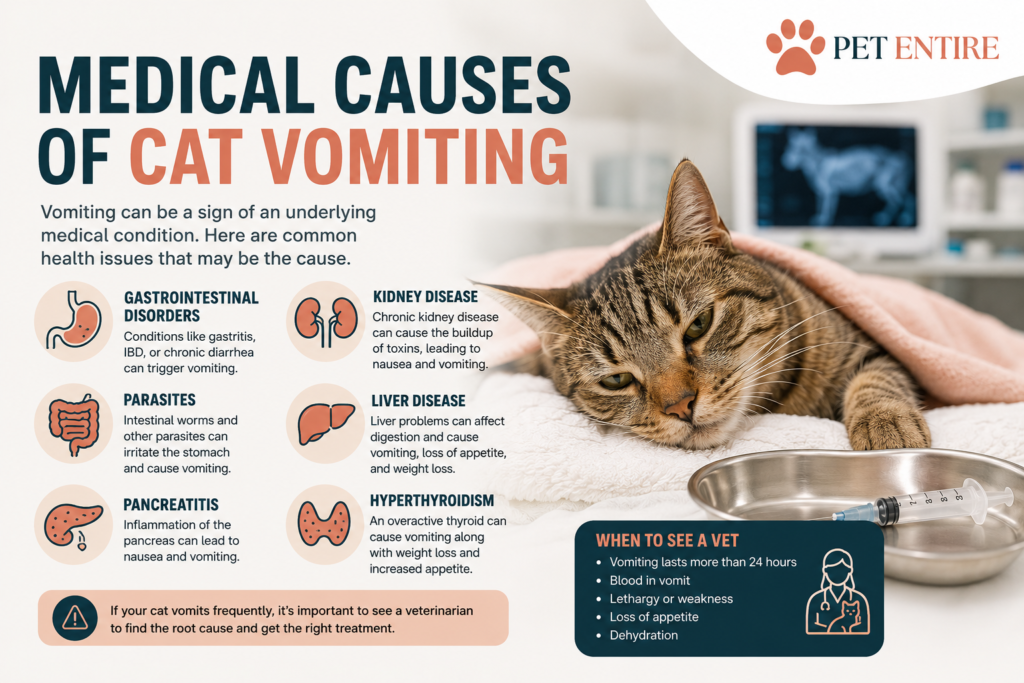
When vomiting in cats becomes persistent, recurrent, or associated with other symptoms, a medical cause becomes more important to investigate. Vomiting can originate from the digestive tract or occur because another organ or body system is affected.
Intestinal Parasites
Intestinal parasites can irritate the gastrointestinal tract and may cause vomiting, diarrhea, reduced appetite, or weight loss. Kittens can be particularly susceptible to some parasites.
A veterinarian may recommend a fecal examination when parasites are suspected. Symptoms alone are not enough to identify the specific parasite or determine the appropriate treatment.
Gastrointestinal Infections and Inflammation
Infections and inflammatory conditions can affect the stomach or intestines. Inflammatory bowel disease, for example, may cause vomiting, diarrhea, appetite changes, and weight loss.
Cats with chronic gastrointestinal problems may appear normal between episodes. That is why chronic vomiting in dogs should not automatically be dismissed as a sensitive stomach.
Pancreatitis
Pancreatitis is inflammation of the pancreas. Cats with pancreatitis may show vomiting, reduced appetite, lethargy, abdominal discomfort, or other nonspecific signs.
Because these symptoms overlap with many other conditions, vomiting cannot confirm pancreatitis. Veterinary examination and appropriate testing may be needed.
Kidney Disease
Kidney disease can contribute to nausea and vomiting. Other possible signs include increased thirst, changes in urination, reduced appetite, weight loss, and lethargy.
Vomiting combined with increased drinking or urination deserves veterinary attention because several kidney and metabolic disorders can produce this combination.
Liver Disease
Liver and biliary disorders can cause vomiting and appetite loss. Depending on the underlying condition, a cat may also develop weight loss, lethargy, or yellow discoloration of the gums, eyes, or skin.
Because liver problems have many possible causes, diagnostic testing is usually needed.
Hyperthyroidism
Hyperthyroidism is common in older cats and can cause weight loss, increased appetite, increased thirst, increased urination, vomiting, diarrhea, and changes in activity.
If an older cat develops recurring vomiting or unexplained weight loss, a veterinary examination can help determine whether an underlying metabolic disorder is involved.
Foreign Objects and Intestinal Blockage
A swallowed object may sometimes pass through the digestive tract, but some objects become lodged and cause an obstruction. Vomiting, poor appetite, abdominal pain, lethargy, and changes in bowel movements can occur.
An intestinal blockage can become serious quickly. If your cat may have swallowed string, yarn, thread, a toy, or another foreign object, seek veterinary advice rather than waiting for symptoms to worsen.
Toxins and Poisoning
Certain plants, medications, household chemicals, pesticides, and other substances can cause vomiting and potentially serious poisoning.
If you suspect your cat has swallowed something toxic, contact a veterinarian or an appropriate animal poison-control service immediately. Do not induce vomiting unless a veterinary professional specifically instructs you to do so. Some substances can cause greater injury when brought back up.
What Does Your Cat’s Vomit Look Like?
The appearance of vomit can provide clues, but color alone cannot diagnose a condition. Yellow liquid does not automatically mean liver disease, and white foam does not automatically mean a simple stomach upset.
Your veterinarian will consider the appearance alongside timing, frequency, appetite, behavior, stool, weight, hydration, and other clinical signs.
| Vomit appearance | Possible explanation | When to pay attention |
| Yellow or yellow-green liquid | May contain bile, especially when the stomach is relatively empty | Repeated episodes or vomiting with other symptoms |
| White foam | May contain saliva and stomach fluid | Recurrent vomiting or signs of illness |
| Clear liquid | May be water, saliva, or stomach fluid | Repeated episodes or inability to keep water down |
| Undigested food | May occur with rapid eating, overeating, or regurgitation | Repeated episodes, especially soon after meals |
| Brown material | May contain partially digested food or other material | Persistent or unusually dark material should be assessed |
| Red or bloody material | May indicate fresh blood | Prompt veterinary assessment is appropriate |
Cat Vomiting Yellow Liquid or Bile
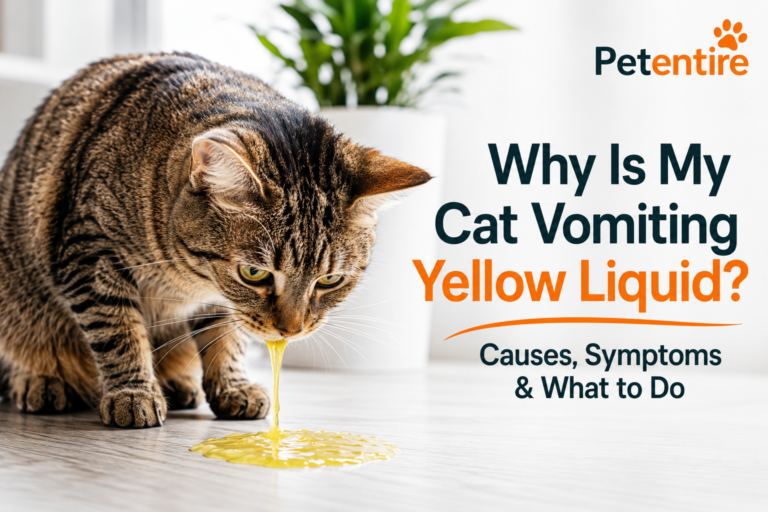
Yellow or yellow-green vomit may contain bile. It can appear when the stomach is relatively empty, but the color does not identify the underlying cause.
If your cat repeatedly vomits yellow liquid or also has poor appetite, lethargy, diarrhea, pain, or weight loss, contact your veterinarian.
Cat Vomiting White Foam
White foam can contain saliva and stomach fluid. It may occur with nausea or gastrointestinal irritation, but it is not specific to one disease.
Repeated cat vomiting white foam, especially with appetite loss or lethargy, should be evaluated rather than treated based on the color alone.
Cat Vomiting Clear Liquid
Clear vomit may consist largely of water, saliva, or stomach fluid. A single episode does not necessarily identify a particular illness.
Repeated cat vomiting clear liquid can contribute to fluid loss. If your cat cannot keep water down or becomes weak or dehydrated, seek veterinary care.
Cat Vomiting Undigested Food
Food that looks largely unchanged may occur after rapid eating or overeating. It can also indicate regurgitation rather than true vomiting.
Pay attention to timing. Material that comes up shortly after eating without obvious retching or abdominal contractions may be regurgitated rather than vomited.
Brown Vomit
Brown vomit can have several possible explanations, including partially digested food. The color alone cannot determine whether bleeding is present.
Repeated brown vomiting, very dark material, weakness, abdominal pain, or other concerning symptoms warrants veterinary assessment.
Cat Vomiting Blood
Blood in vomit should not be ignored. Fresh blood may appear red, while partially digested blood can appear darker.
A cat vomiting blood should receive prompt veterinary advice. Emergency care may be necessary when blood is accompanied by severe weakness, collapse, significant pain, repeated vomiting, or other signs of serious illness.
Why Does My Cat Vomit After Eating?
Cat vomiting after eating can have several explanations. Eating too quickly, overeating, a sudden food change, food sensitivity, gastrointestinal disease, or other conditions may be involved.
Timing is particularly useful. True vomiting usually involves nausea, retching, and abdominal contractions. Regurgitation is generally more passive and often occurs shortly after eating or drinking.
Eating Too Quickly
A cat that gulps food may bring it back up shortly after eating. The material may look relatively unchanged.
If this happens repeatedly, discuss feeding habits with your veterinarian. Slower feeding may help some cats, but recurring episodes should not automatically be attributed to eating speed.
Overeating
Large meals can sometimes contribute to vomiting or stomach discomfort. Feeding an appropriate amount for your cat’s individual needs may help, but persistent vomiting requires investigation.
Sudden Diet Changes
Introducing a new food too quickly may cause digestive upset. Gradual food transitions are generally preferable when changing a healthy cat’s diet.
If vomiting continues, do not assume the diet is the only cause.
Food Intolerance or Sensitivity
If vomiting repeatedly occurs after a particular food, treat, or diet, tell your veterinarian. A food-related disorder may be considered alongside other possible causes.
Keeping a simple record of meals and vomiting episodes can help identify patterns.
Cat Vomiting vs. Regurgitation
Vomiting and regurgitation are not the same process. Knowing the difference can give your veterinarian valuable information.
| Feature | Vomiting | Regurgitation |
| Before the episode | Nausea, lip licking, drooling, or restlessness may occur | Often little warning |
| Abdominal movement | Usually involves retching and abdominal contractions | Usually passive |
| Timing | Can occur at various times after eating | Often occurs soon after eating or drinking |
| Material | May contain partially digested food, fluid, bile, or foam | Often contains relatively undigested food or liquid |
| Main source | Stomach or upper small intestine | Often the esophagus |
If you are unsure what you are seeing, recording a short video can help your veterinarian distinguish cat regurgitation vs vomiting.
Cat Vomiting With Other Symptoms
The combination of symptoms often matters more than the appearance of vomit alone. A cat that vomits once but remains bright and comfortable is different from one that vomits while refusing food or becoming weak.
| Combination | Why it matters |
| Cat vomiting and diarrhea | May occur with dietary upset, infection, parasites, inflammation, or other gastrointestinal problems |
| Cat vomiting and lethargy | May indicate that your cat is more broadly unwell |
| Cat vomiting and not eating | Raises concern when appetite loss persists, particularly alongside repeated vomiting |
| Vomiting and weight loss | May occur with chronic gastrointestinal, metabolic, or other disease |
| Vomiting with increased thirst or urination | Can occur with kidney, thyroid, metabolic, or urinary disorders |
Cat Vomiting and Diarrhea
Vomiting and diarrhea together can increase fluid loss. Possible causes include dietary problems, infections, parasites, and gastrointestinal inflammation.
Prompt veterinary attention is particularly important when diarrhea is frequent or watery, contains blood, or occurs with poor appetite or lethargy.
Cat Vomiting and Lethargy
Lethargy suggests that your cat may be experiencing more than a brief stomach upset. A cat that is unusually weak, withdrawn, or inactive after vomiting should be assessed promptly.
This becomes more concerning when lethargy occurs with appetite loss, pain, dehydration, or repeated vomiting.
Cat Vomiting and Not Eating
Loss of appetite can accompany many illnesses. Persistent vomiting combined with refusal to eat can increase concern for dehydration and an underlying medical problem.
Do not force-feed a vomiting cat unless your veterinarian specifically recommends it.
Vomiting and Weight Loss
Recurring vomiting with weight loss can occur with chronic gastrointestinal disease, parasites, kidney disease, hyperthyroidism, and other conditions.
If your cat is cat vomiting frequently and gradually losing weight, arrange a veterinary examination.
Vomiting With Increased Thirst or Urination
Changes in drinking and urination can provide important diagnostic clues. Kidney disease, hyperthyroidism, diabetes, and urinary disorders can all affect these patterns.
Your veterinarian may recommend blood and urine tests when vomiting occurs alongside these changes.
When Should I Worry About Cat Vomiting?
The most important factors are frequency, duration, accompanying symptoms, and your cat’s overall condition.
An isolated episode in an otherwise healthy, alert cat may sometimes be monitored. Repeated vomiting or vomiting accompanied by lethargy, weakness, reduced appetite, blood, diarrhea, abdominal pain, dehydration, increased thirst, or changes in urination warrants veterinary attention. Cornell Feline Health Center specifically recommends evaluation when a cat vomits more than once a week or has vomiting alongside concerning symptoms.
A Simple Decision Guide
| Situation | Recommended action |
| One isolated episode and your cat quickly returns to normal | Monitor closely for recurrence and other symptoms |
| Vomiting happens repeatedly or continues | Contact your veterinarian |
| Vomiting with diarrhea, lethargy, appetite loss, weight loss, pain, or dehydration | Arrange veterinary care promptly |
| Blood in vomit or suspected toxin or foreign-object ingestion | Seek prompt veterinary assessment |
| Severe weakness, collapse, difficulty standing, severe pain, or breathing difficulty | Seek emergency veterinary care |
When You Can Monitor
If your cat vomits once and then returns to normal behavior, remains alert, drinks normally, and shows no other concerning signs, close observation may be reasonable.
Keep track of any further vomiting. If the episodes recur or your cat’s behavior changes, contact your veterinarian.
When to Call the Veterinarian
Contact your veterinarian when vomiting becomes recurrent, does not settle, or occurs with appetite loss, lethargy, diarrhea, weight loss, abdominal pain, dehydration, blood, or changes in thirst or urination.
VCA Urgent Care advises evaluation for pets that have vomited more than twice in 24 hours or are anorexic or lethargic.
When Cat Vomiting May Be an Emergency
A cat vomiting emergency may involve severe or repeated vomiting accompanied by collapse, marked weakness, severe pain, difficulty standing, breathing difficulty, suspected poisoning, or suspected intestinal obstruction.
If you know your cat swallowed a dangerous object or potentially toxic substance, do not wait for vomiting to resolve on its own. Contact a veterinary professional immediately.
What to Do if Your Cat Is Vomiting
When your cat vomits, focus on observation and safety rather than trying several home remedies. The right response depends on the cause, your cat’s health, and the severity of the episode.
Monitor Your Cat’s Symptoms
Record when the vomiting occurred, how many times it happened, what the material looked like, whether your cat had recently eaten, and whether diarrhea or other symptoms developed.
A short video can also help your veterinarian determine whether the episode was vomiting, regurgitation, or another behavior.
Keep Fresh Water Available
Vomiting can contribute to fluid loss. Fresh water should generally be available unless your veterinarian has given you different instructions.
If your cat repeatedly vomits after drinking or cannot keep water down, contact a veterinarian promptly.
Be Careful With Food Changes
Avoid making several dietary changes at once. Depending on the cause, your veterinarian may recommend a specific feeding plan or veterinary diet.
A feeding strategy that helps one cat may not be appropriate for another, particularly when an underlying disease is present.
Avoid Human Medications
Never give your cat human painkillers, anti-nausea medicines, antacids, or other medication unless a veterinarian specifically tells you to use them.
Some human medicines can be dangerous or toxic to cats. If poisoning is suspected, contact a veterinarian or poison-control service and do not induce vomiting unless specifically instructed.
How Veterinarians Diagnose Vomiting in Cats
Because cat vomiting causes range from dietary problems to systemic disease, diagnosis usually begins with a detailed history and physical examination.
Your veterinarian may ask about food, recent dietary changes, medications, access to plants or chemicals, possible foreign objects, bowel movements, weight changes, vomiting frequency, and other symptoms.
Physical Examination and Medical History
The veterinarian may assess your cat’s hydration, body weight, temperature, abdomen, gums, and general condition.
Details from home are valuable. Tell the veterinarian what your cat ate, when vomiting began, how often it occurs, and whether the material contained food, bile, foam, hair, or blood.
Blood, Urine, and Fecal Tests
Blood tests may help identify abnormalities involving the kidneys, liver, metabolism, inflammation, or other body systems. Urinalysis can provide additional information about hydration, kidney function, and urinary health.
Fecal testing may be appropriate when parasites or certain gastrointestinal problems are suspected.
X-Rays, Ultrasound, and Other Imaging
X-rays can help identify certain foreign objects, obstruction patterns, or other abdominal abnormalities. Ultrasound can provide a more detailed view of abdominal organs and the gastrointestinal tract.
In selected cases, endoscopy, biopsy, or surgery may be needed to determine the cause.
How Is Cat Vomiting Treated?
There is no single cat vomiting treatment because vomiting is a symptom, not a specific disease.
Treatment depends on the underlying cause. A cat with mild digestive upset may need supportive care, while a cat with dehydration, an obstruction, poisoning, pancreatitis, or significant organ disease may require more intensive veterinary treatment.
Treatment for Dietary Causes
A veterinarian may recommend an appropriate easily digestible or therapeutic diet and a controlled feeding plan.
The exact diet depends on the cat’s condition. Avoid assuming that one generic food or home remedy is suitable for every vomiting cat.
Treatment for Hairballs and Gastrointestinal Problems
Treatment depends on what is causing the gastrointestinal problem. Parasites may require veterinary-prescribed antiparasitic treatment, while inflammatory intestinal disease may require dietary management or prescription medication.
Repeated hairball-like episodes may also require investigation rather than simply being treated as routine hairballs.
Treatment for Underlying Medical Conditions
Cats with significant dehydration may need fluids. Some may require prescription anti-nausea treatment, nutritional support, hospitalization, or other supportive care.
An intestinal obstruction may require endoscopy or surgery. Kidney disease, liver disease, pancreatitis, hyperthyroidism, infections, and other disorders each require treatment directed at the underlying condition.
How to Prevent Vomiting in Cats
Not every episode can be prevented. Still, reducing avoidable triggers can support your cat’s digestive health and reduce exposure to common hazards.
Feed a Consistent, Appropriate Diet
Avoid unnecessary food changes and introduce new diets gradually when appropriate. Keep spoiled food, table scraps, and potentially harmful foods away from your cat.
Help Prevent Fast Eating
If your cat regularly eats very quickly, discuss feeding options with your veterinarian. Adjusting meal size or feeding style may help some cats.
Repeated vomiting should still be investigated rather than automatically attributed to eating speed.
Groom Your Cat Regularly
Regular grooming can reduce the amount of loose hair your cat swallows. This may be especially useful for cats with long or dense coats.
Frequent hairball vomiting or repeated unproductive retching is not something to routinely dismiss as normal.
Keep Toxins and Foreign Objects Away
Store medications, cleaners, pesticides, toxic plants, string, yarn, rubber bands, and small objects where your cat cannot reach them.
If your cat may have swallowed something dangerous, seek veterinary advice promptly instead of waiting for symptoms to develop or worsen.
Schedule Regular Veterinary Checkups
Routine veterinary examinations can help identify health changes early. Regular monitoring is particularly useful for older cats and cats with ongoing medical problems.
Frequently Asked Questions About Cat Vomiting
Why Is My Cat Vomiting but Acting Normal?
Why is my cat vomiting if it still seems completely normal? An isolated episode can occur after eating too quickly, swallowing hair, or experiencing temporary stomach irritation.
Normal behavior is reassuring, but it does not completely rule out illness. Monitor for recurrence or other symptoms and contact your veterinarian if vomiting becomes repeated.
Why Does My Cat Keep Vomiting?
Repeated vomiting can result from dietary problems, parasites, gastrointestinal inflammation, pancreatitis, kidney or liver disease, hyperthyroidism, toxins, or a foreign object.
Because the possible causes are so broad, a cat that keeps vomiting should be evaluated rather than diagnosed from the vomit alone.
Why Is My Cat Vomiting Yellow Liquid?
Yellow liquid may contain bile and can occur when the stomach is relatively empty. The color alone does not establish a diagnosis.
Repeated yellow vomiting, particularly with poor appetite, lethargy, diarrhea, pain, or weight loss, warrants veterinary advice.
Why Is My Cat Vomiting White Foam?
White foam may contain saliva and stomach fluid. It can occur with nausea or gastrointestinal irritation but is not specific to one condition.
Repeated vomiting of white foam or vomiting accompanied by other symptoms should be assessed by a veterinarian.
Why Is My Cat Throwing Up Undigested Food?
Undigested food may appear when a cat eats too quickly or overeats. It can also indicate regurgitation, especially when the material comes up soon after eating without abdominal contractions.
If this happens repeatedly, discuss it with your veterinarian and consider keeping a record or video of the episodes.
Is It Normal for Cats to Vomit?
Occasional vomiting can occur in cats, but frequent or recurring vomiting should not simply be considered normal.
Cornell recommends veterinary evaluation when vomiting occurs more than once a week or alongside signs such as lethargy, weakness, appetite loss, blood, increased thirst, urinary changes, or diarrhea.
Should I Give My Cat Food After Vomiting?
There is no single feeding schedule that is appropriate for every vomiting cat. The best approach depends on the cat’s age, health, hydration, severity of vomiting, and suspected cause.
If vomiting continues or your cat refuses food, ask your veterinarian for individualized feeding advice.
How Often Should Cats Vomit?
There is no universal frequency that is considered normal for every cat. An isolated episode can happen, but recurrent vomiting deserves attention.
If your cat vomits regularly, particularly more than once a week or alongside other symptoms, arrange a veterinary assessment.
Can a Cat Vomit From Stress?
Stress can affect a cat’s gastrointestinal system and may contribute to digestive signs in some situations. However, vomiting should not automatically be blamed on stress.
If vomiting is repeated, severe, or accompanied by appetite loss, lethargy, diarrhea, pain, or other changes, your veterinarian should assess your cat for medical causes.
Final Takeaway
Why is my cat vomiting? It could be something relatively minor, such as a hairball, eating too quickly, overeating, or dietary irritation. It could also signal parasites, gastrointestinal disease, pancreatitis, kidney or liver disease, hyperthyroidism, poisoning, or an intestinal obstruction.
Look at the whole picture rather than the vomit color alone. Frequency, timing, appetite, energy level, hydration, weight, and accompanying symptoms provide much more useful information.
One isolated episode in an otherwise healthy cat may sometimes be monitored. Repeated vomiting or vomiting with blood, significant lethargy, weakness, pain, dehydration, appetite loss, suspected poisoning, or a swallowed foreign object warrants prompt veterinary attention. When your cat appears severely ill or has signs of an emergency, seek immediate veterinary care.