Seeing your cat bring up bright yellow or yellow-green liquid can be alarming, especially when there is little or no food in the vomit. Why Is My Cat Vomiting Yellow Liquid? In many cases, the color comes from bile, a digestive fluid that can appear after the stomach has emptied. Still, yellow vomit is a sign rather than a diagnosis. The cause can range from temporary stomach irritation to gastrointestinal disease, parasites, pancreatitis, an obstruction, or another medical problem.
The most useful clues are what happens before and after the episode. Notice when your cat vomits, whether food or hair is present, how often it happens, whether your cat keeps drinking, and whether appetite, energy, weight, stool, or urination have changed. A single episode in an otherwise normal cat may be less concerning than repeated vomiting accompanied by weakness, pain, diarrhea, dehydration, or loss of appetite.
Quick Answer
Yellow liquid vomit in cats is often bile, particularly when the stomach is relatively empty. An isolated episode may happen after a long gap between meals or mild digestive upset. Yellow vomit alone cannot identify the underlying cause, though. Repeated vomiting, inability to keep water down, not eating, lethargy, abdominal pain, blood, or suspected toxin or foreign-object ingestion deserves prompt veterinary attention.
What Does Yellow Liquid Vomit Mean in Cats?
Yellow liquid usually reflects bile or other digestive fluid rather than a disease-specific substance. Bile is produced by the liver and normally enters the small intestine to help with digestion. When vomiting occurs after the stomach has emptied, bile may become more noticeable in the expelled fluid.
The important distinction is that yellow color provides a clue, not a diagnosis. A cat may vomit bile after a minor dietary upset, yet similar-looking material can occur with gastrointestinal inflammation or more serious illness. The timing, frequency, accompanying symptoms, and your cat’s overall behavior provide much more useful information.
Is Yellow Cat Vomit Bile?
Often, yes. Bile is a yellowish to greenish digestive fluid produced by the liver and released into the intestine. When the stomach contains little food, bile can be visible in vomit. Yellow or foamy vomit therefore may contain bile, although appearance alone cannot prove exactly what caused the vomiting.
Why Is My Cat Vomiting Yellow Liquid or Yellow-Green Liquid?
Yellow or yellow green fluid can appear when digestive secretions are expelled without much food. An empty stomach is one possible explanation, particularly after vomiting has already emptied the stomach. Gastrointestinal irritation, dietary problems, parasites, pancreatitis, liver or biliary disease, and obstruction can also cause vomiting.
Yellow Liquid vs. Stomach Fluid in Cat Vomit
Cat vomit can contain several materials at once, including partially digested food, mucus, froth, hair, bile, water, or stomach contents. Yellow fluid may therefore be mixed with foam or mucus rather than appearing as pure bile. The visual appearance can help your veterinarian but usually cannot establish the cause by itself.
What Does Cat Vomit Color Tell You?
Vomit color can offer a useful observation, but don’t use it as a home diagnosis. Different conditions can produce overlapping appearances, and food or swallowed material can change the color.
| Vomit appearance | What it may indicate | What to remember |
| Yellow or yellow-green liquid | Bile or digestive fluid | Common after the stomach has emptied, but repeated episodes need evaluation |
| White or clear foam | Stomach fluid, mucus, or froth | Can occur with stomach irritation or vomiting on an empty stomach |
| Food or partially digested food | Recent meal or delayed stomach emptying | Timing relative to meals is useful |
| Hair or a hairball | Swallowed grooming hair | Occasional hairballs can occur, but frequent vomiting should be discussed with a veterinarian |
| Pink or red material | Possible fresh blood | Needs prompt veterinary assessment |
| Dark brown or coffee-ground material | Digested blood may be present | Treat as a potentially serious finding |
| Unusual plant or foreign material | Possible dietary indiscretion or ingestion | Tell the veterinarian exactly what your cat may have swallowed |
Color alone cannot diagnose the cause. Blood, repeated vomiting, abdominal pain, weakness, dehydration, appetite loss, or suspected toxin or foreign-object exposure make the situation more concerning.
Why Is My Cat Vomiting Yellow Liquid?
Several relatively common problems can lead to yellow fluid appearing in vomit. The key is not to assume that every episode has the same explanation. A healthy cat with one isolated episode is different from a cat that vomits repeatedly or develops other symptoms.
Empty Stomach or Hunger
An empty stomach can make bile more visible when a cat vomits. This may explain occasional yellow fluid, particularly when vomiting happens after a long interval without food. Still, recurring empty stomach vomiting should not automatically be dismissed as hunger because gastrointestinal or systemic disease can produce a similar pattern.
Eating Too Quickly or Overeating
Eating a large meal rapidly can upset the digestive tract and trigger vomiting. Some cats also swallow considerable air while eating quickly. If episodes repeatedly follow rushed meals, discuss feeding strategies with your veterinarian rather than assuming the yellow color itself is the problem.
Sudden Food Changes
Changing foods abruptly can upset a cat’s gastrointestinal system. New ingredients, unfamiliar treats, table scraps, spoiled food, or dietary indiscretion can also contribute to vomiting. If a food change preceded the episodes, tell your veterinarian exactly when the change occurred and what foods were involved.
Food Intolerance or Dietary Problems
Some cats develop gastrointestinal signs after eating ingredients they do not tolerate well. Food allergy or dietary intolerance can cause vomiting and may occur alongside diarrhea or changes in body condition. Persistent food-related vomiting needs veterinary evaluation because dietary problems can resemble other gastrointestinal disorders.
Hairballs
Cats swallow loose hair during grooming, and some hair may accumulate into a hairball that is eventually vomited. A hairball can be surrounded by bile or digestive fluid, making the material look yellow. Occasional hairballs can occur, but frequent vomiting should not automatically be blamed on hairballs.
Gastrointestinal Irritation
Inflammation of the stomach or intestines can trigger vomiting. Gastroenteritis may result from infection, parasites, dietary changes, medications, or other irritants. Yellowish bile can become visible after the stomach empties during repeated vomiting.
Eating Something Unsafe or Indigestible
Cats can chew plants, food scraps, packaging, string, toys, and other objects. Some substances irritate the digestive tract, while foreign objects can become lodged and cause an obstruction. If something potentially toxic or indigestible is missing, treat that information seriously and contact a veterinarian promptly.
When Does Your Cat Vomit Yellow Liquid?
The timing of vomiting can provide valuable context. A pattern connected to meals, drinking, nighttime, or a particular daily routine can help your veterinarian narrow down possible causes.
Cat Vomiting Yellow Liquid in the Morning
Morning vomiting may occur when the stomach has been empty for several hours, which can make bile more visible. However, morning episodes that happen repeatedly deserve attention. A consistent pattern can also occur with gastrointestinal or systemic disease, so don’t assume that the time of day proves an empty stomach is responsible.
Cat Vomiting Before Eating
Vomiting before breakfast may mean the stomach contains little food. If your cat otherwise behaves normally and the episode is isolated, close observation may be reasonable. Recurrent vomiting before meals should be discussed with a veterinarian, especially if appetite, weight, stool, or energy changes.
Cat Vomiting After Eating
Vomiting shortly after eating can occur with dietary indiscretion, gastrointestinal irritation, food intolerance, or eating too quickly. Your veterinarian may also need to distinguish vomiting from regurgitation. True vomiting usually involves nausea and abdominal contractions, while regurgitation is more passive and often brings up undigested material.
Cat Vomiting After Drinking Water
Vomiting after drinking can happen when an already irritated stomach cannot tolerate fluid. It becomes more concerning when your cat repeatedly vomits every attempt to drink because dehydration can develop. A cat that cannot keep water down needs prompt veterinary advice rather than repeated home treatment.
Cat Vomiting Yellow Liquid at Night
Nighttime vomiting may simply coincide with a longer period without food, but the timing alone cannot establish the cause. Keep a record of dinner time, treats, water intake, vomiting time, stool, and behavior. A repeated nighttime pattern is useful information for your veterinarian.
Recurring Vomiting at the Same Time
A predictable pattern deserves attention even when your cat seems comfortable between episodes. Repeated vomiting can occur with dietary issues, gastrointestinal disorders, parasites, metabolic disease, or other conditions. Cornell notes that frequent vomiting and vomiting accompanied by signs such as lethargy, decreased appetite, diarrhea, blood, or abnormal thirst or urination should be evaluated promptly.
Medical Conditions That Can Cause Yellow Vomiting in Cats
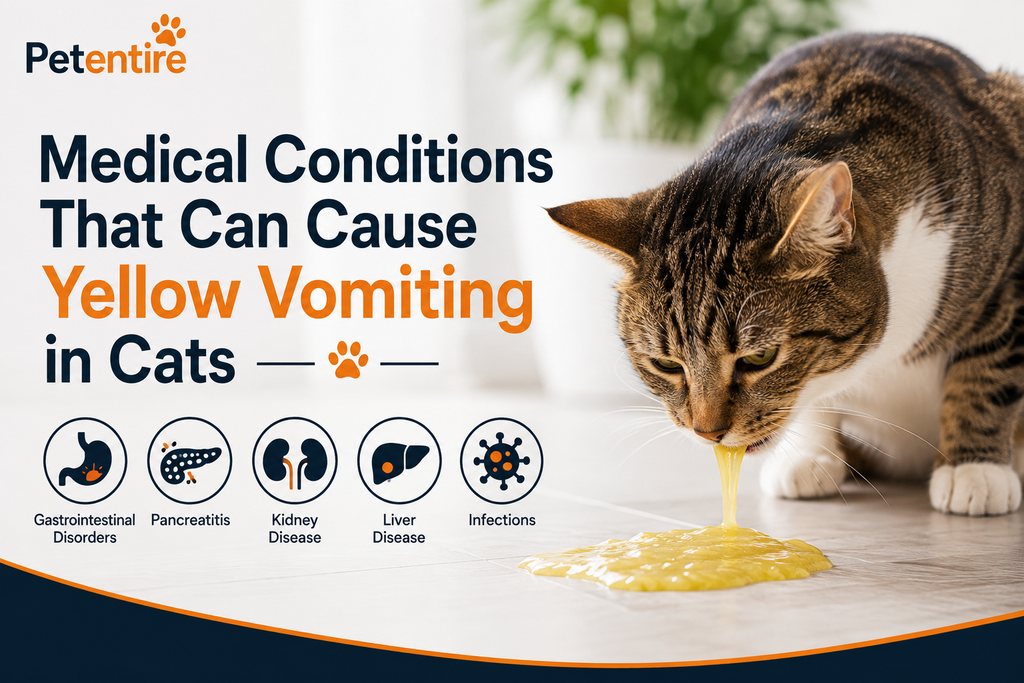
Yellow vomit can occasionally accompany medical disorders affecting the digestive tract or other organs. These conditions cannot be diagnosed from vomit color alone, which is why recurring episodes require a proper veterinary assessment.
Gastrointestinal Disease
Gastrointestinal disease can cause vomiting, diarrhea, appetite changes, abdominal discomfort, and weight loss. Causes include inflammation, infection, parasites, dietary problems, foreign material, obstruction, and tumors. The severity and combination of signs help determine how urgently your cat should be evaluated.
Gastritis
Gastritis means inflammation of the stomach lining. It can follow dietary indiscretion, infections, parasites, medications, toxins, or other illnesses. Vomit may contain bile, foam, food, blood, or evidence of something the cat swallowed. Persistent or severe vomiting requires veterinary investigation rather than treatment based on appearance alone.
Parasites
Internal parasites can cause vomiting and gastrointestinal upset in cats. Some parasitic infections also produce diarrhea, poor body condition, appetite changes, or weight loss. Fecal testing may be part of the diagnostic workup when parasites are considered possible.
Inflammatory Bowel Disease (IBD)
Feline inflammatory bowel disease involves chronic inflammation within the gastrointestinal tract. Vomiting, diarrhea, reduced appetite, and weight loss can occur, although the exact combination varies between cats. Diagnosis may require several tests and, in some cases, intestinal tissue sampling because other diseases can produce similar signs.
Pancreatitis
Pancreatitis is inflammation of the pancreas and can cause vomiting, reduced appetite, lethargy, and abdominal discomfort. Cats may show subtle signs rather than dramatic pain. Because pancreatitis overlaps clinically with gastrointestinal and liver disorders, a veterinarian may need blood tests and imaging to investigate it.
Liver Disease
Liver and biliary disorders can cause vomiting, appetite loss, weight loss, and lethargy. Some cats also develop jaundice, which creates a yellow tint in the gums, eyes, or skin. Yellow vomit is not the same thing as jaundice and should not be used to diagnose liver disease.
Kidney Disease
Kidney disease can contribute to vomiting and appetite changes because systemic illness affects the body beyond the digestive tract. Increased thirst or urination can also be relevant clues. Persistent vomiting combined with changes in drinking or urination should be reported to a veterinarian.
Hyperthyroidism
Hyperthyroidism is particularly relevant in mature and senior cats. Common signs include weight loss despite a good appetite, increased activity or vocalization, vomiting, diarrhea, and increased thirst and urination. A blood test measuring thyroid hormone helps confirm the diagnosis.
Foreign Body or Intestinal Obstruction
A swallowed foreign object can obstruct the digestive tract and become a serious medical problem. Vomiting and appetite loss are common signs, while lethargy, abdominal pain, dehydration, diarrhea, swelling, or shock may occur. String, yarn, fabric, toys, and other missing objects should be reported to the veterinarian.
Yellow Vomit With Other Symptoms: What Could It Mean?
The combination of symptoms often provides more useful information than the color of the vomit. Watch your cat’s appetite, energy, stool, water consumption, urination, body weight, and comfort.
Yellow Vomiting and Diarrhea
Vomiting combined with diarrhea can occur with gastroenteritis, dietary problems, parasites, infection, inflammatory disease, or other disorders. The risk of dehydration increases when both vomiting and diarrhea cause fluid loss. Prompt veterinary advice is particularly important when the symptoms are repeated or your cat seems unwell.
Yellow Vomiting and Lethargy
A cat that becomes unusually tired, weak, withdrawn, or difficult to engage deserves more attention than a cat that vomits once and immediately returns to normal. Lethargy can accompany dehydration, gastrointestinal disease, metabolic disorders, toxins, obstruction, and other illnesses.
Yellow Vomiting and Not Eating
Vomiting plus loss of appetite is a concerning combination, particularly when your cat refuses normal food rather than simply skipping one treat. Appetite loss can accompany gastrointestinal disease, pancreatitis, liver disease, kidney disease, obstruction, and other conditions. Contact your veterinarian if your cat stops eating or appears ill.
Yellow Vomiting and Weight Loss
Unexplained weight loss suggests that the problem may extend beyond a temporary stomach upset. Chronic gastrointestinal disease, hyperthyroidism, kidney disease, liver disease, and other conditions can cause vomiting alongside changes in body weight. Record recent weight changes and mention them during the veterinary visit.
Yellow Vomiting and Abdominal Pain
Abdominal pain can appear as hiding, resisting handling, restlessness, a tense posture, vocalization, or reluctance to move. Vomiting with obvious abdominal pain raises concern for conditions such as gastrointestinal inflammation, pancreatitis, or obstruction and warrants prompt veterinary evaluation.
Yellow Vomiting and Dehydration
Repeated vomiting can remove significant amounts of fluid from the body. Signs of dehydration may include weakness, reduced normal activity, dry or sticky gums, and other changes your veterinarian can assess more reliably during an examination. A cat that repeatedly vomits and cannot replace lost fluids needs prompt veterinary attention.
Yellow Vomiting With Increased Thirst
Increased thirst can be relevant when vomiting occurs alongside kidney disease, diabetes, hyperthyroidism, liver problems, or other systemic conditions. Don’t judge water intake from a single drink. Look for a sustained change compared with your cat’s normal behavior and report it to your veterinarian.
Yellow Vomiting With Increased Urination
More frequent or larger-volume urination can accompany several systemic disorders. When vomiting occurs with increased thirst and urination, your veterinarian may recommend blood and urine testing to investigate metabolic or kidney-related causes.
How Serious Is Yellow Vomiting in Cats?
Yellow vomit ranges from a minor, isolated digestive upset to a sign of significant disease. The number of episodes, associated symptoms, and your cat’s condition between episodes are more informative than the color alone.
One-Time Yellow Vomiting
If your cat vomits yellow liquid once and quickly returns to normal behavior, continues drinking, and shows normal interest in food, close observation may be reasonable. Keep the environment calm and record what happened. If additional symptoms appear, contact your veterinarian.
Occasional Yellow Vomiting
Occasional vomiting can occur in otherwise healthy cats, particularly when hair is involved. Still, repeated episodes should not become a routine expectation. Cornell advises veterinary evaluation for cats that vomit frequently or develop additional signs such as appetite loss, lethargy, blood, diarrhea, or abnormal thirst or urination.
Repeated or Frequent Vomiting
Repeated vomiting deserves veterinary attention because it can cause dehydration and electrolyte disturbances while also signaling an underlying disorder. Conditions ranging from gastrointestinal inflammation to obstruction and systemic disease can present with vomiting.
Daily Yellow Vomiting
Daily vomiting is not something to routinely manage at home simply because the fluid is yellow. A recurring pattern warrants a veterinary examination to determine whether dietary, gastrointestinal, metabolic, infectious, or structural problems are involved.
Chronic Vomiting
Chronic vomiting can be associated with weight loss, weakness, dehydration, electrolyte abnormalities, gastrointestinal disease, kidney disease, liver disease, pancreatitis, parasites, obstruction, or other disorders. Diagnosis may require a combination of history, examination, laboratory testing, and imaging.
When Yellow Vomiting Is an Emergency
The following table provides practical guidance. It is not a substitute for veterinary triage, especially when your cat appears seriously ill.
| Situation | Recommended action |
| One isolated episode and cat is otherwise normal | Monitor closely |
| Vomiting happens repeatedly | Contact a veterinarian |
| Cat cannot keep water down | Seek veterinary advice promptly |
| Vomiting + not eating | Contact a veterinarian |
| Vomiting + lethargy or weakness | Veterinary evaluation |
| Blood in vomit | Prompt or urgent veterinary assessment |
| Severe abdominal pain or collapse | Emergency veterinary care |
| Suspected toxin ingestion | Contact a veterinarian or animal poison service promptly |
| Suspected foreign object | Prompt veterinary assessment |
VCA identifies lethargy, appetite loss, abdominal pain, diarrhea, dehydration, blood in vomit, and suspected toxin or foreign-object ingestion as reasons for immediate veterinary care.
When Should You Take a Cat Vomiting Yellow Liquid to the Vet?
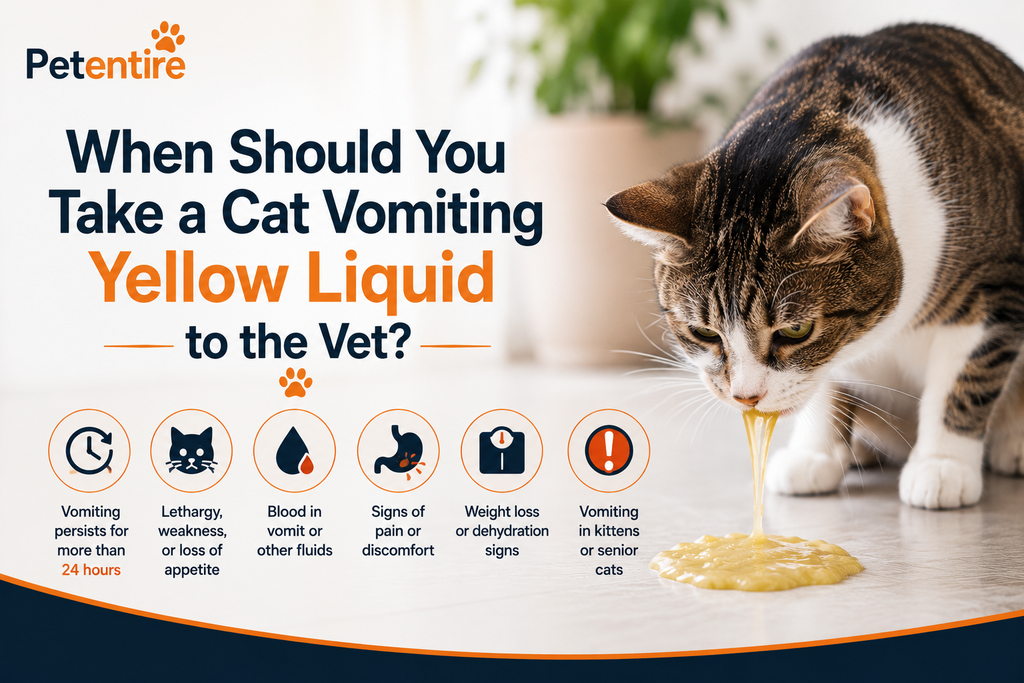
When in doubt, judge the cat rather than the color of the vomit. A bright yellow puddle does not tell you whether the problem is minor or serious. Changes in behavior, appetite, hydration, bowel movements, urination, and comfort are much more useful warning signs.
Warning Signs That Need Veterinary Attention
Seek veterinary advice when vomiting is repeated, persistent, or accompanied by lethargy, weakness, appetite loss, diarrhea, abdominal pain, dehydration, blood, weight loss, fever, abnormal thirst, or changes in urination. These combinations can indicate more than simple stomach upset.
Signs of Dehydration
Watch for reduced drinking, weakness, unusual tiredness, dry or sticky gums, and other changes from your cat’s normal condition. Because cats can hide illness, suspected dehydration should be taken seriously rather than treated with an unverified home remedy.
When Your Cat Cannot Keep Water Down
Repeatedly vomiting water is more concerning than a single episode of yellow fluid. Your cat needs fluids to replace normal losses, and ongoing vomiting can worsen dehydration. Contact a veterinarian promptly if every attempt to drink results in vomiting.
When Your Cat Stops Eating
A cat that refuses food while vomiting needs veterinary attention, especially when the appetite loss persists or other symptoms appear. Loss of appetite can accompany gastrointestinal, pancreatic, liver, kidney, infectious, and obstructive disorders.
When Vomiting Keeps Coming Back
Recurring vomiting deserves investigation even if your cat seems normal between episodes. A veterinarian can look for patterns involving food, hairballs, parasites, gastrointestinal inflammation, metabolic disease, medications, or other causes rather than treating the color alone.
When You Suspect a Foreign Object or Toxin
If your cat may have swallowed medication, chemicals, plants, string, yarn, packaging, or another dangerous object, contact a veterinarian promptly. In the United States, the ASPCA Animal Poison Control Center is available 24/7 at (888) 426-4435.
Do not induce vomiting at home unless a veterinary professional specifically instructs you to do so. ASPCA warns that home attempts can cause additional harm, and hydrogen peroxide should not be given to cats.
What to Do if Your Cat Is Vomiting Yellow Liquid
The safest approach is careful observation without trying to diagnose the illness yourself. Small details can help a veterinarian identify the likely cause much faster.
Monitor Your Cat’s Symptoms
Watch appetite, energy, posture, stool, urination, drinking, breathing, and behavior. Look at the vomit without touching it unnecessarily and note whether it contains food, hair, foam, blood, grass, medication, or another unusual material.
Monitor Hydration and Water Intake
Keep fresh water available and observe whether your cat is drinking normally. Do not force large amounts of water into the mouth. If drinking repeatedly triggers vomiting, seek veterinary advice promptly.
Record the Vomiting Episodes
Write down the time of each episode and describe the material. A photograph can also be useful for your veterinarian. Recording frequency helps distinguish an isolated event from a recurring pattern.
Check When and What Your Cat Ate
Record meal times, food brands, treats, table scraps, new foods, and anything unusual your cat may have eaten. This information can reveal a relationship between meals and vomiting.
Observe Appetite and Behavior
Notice whether your cat still wants food, plays normally, uses the litter box, and interacts with you. A cat that vomits once and behaves normally is different from one that hides, refuses food, or becomes weak.
Avoid Human Medications
Do not give your cat human anti-nausea medicines, painkillers, antacids, or other medications unless your veterinarian specifically prescribes or recommends them. Cats process many medicines differently from people, and some human drugs can be dangerous.
Avoid Unsafe Home Remedies
Do not give milk, salt, oils, herbs, or other household substances in an attempt to stop vomiting. Never try to make a cat vomit unless a veterinary professional specifically tells you what to do.
How Do Vets Diagnose the Cause of Yellow Vomiting?
Veterinary diagnosis starts with the cat, not the color of the vomit. Your veterinarian will combine the history, physical examination, symptoms, and test results to narrow down possible causes.
Physical Examination and Medical History
Your veterinarian may ask about vomiting frequency, meal timing, diet changes, appetite, water consumption, medications, parasite prevention, weight changes, stool, urination, and possible toxin or foreign-object exposure. The physical examination may include abdominal palpation and assessment of hydration and overall condition.
Blood Tests
Bloodwork can help assess hydration, organ function, inflammation, blood-cell changes, electrolytes, and metabolic problems. Depending on the suspected condition, additional tests may be appropriate.
Urine Tests
Urinalysis provides information about urine concentration, kidney function, hydration, glucose, and other abnormalities. It can be especially useful when vomiting occurs alongside increased thirst or urination.
Fecal Testing for Parasites
Fecal testing can help identify intestinal parasites and other abnormalities. Parasites are one of several possible causes of vomiting, so testing may be recommended based on age, lifestyle, symptoms, and medical history.
X-Rays
Abdominal radiographs can help identify certain foreign objects, obstruction patterns, abnormal gas, and other structural problems. X-rays are particularly useful when a swallowed object is suspected.
Abdominal Ultrasound
Ultrasound can provide detailed information about abdominal organs and the gastrointestinal tract. It may help evaluate the liver, gallbladder, pancreas, intestines, and abnormalities that are not fully characterized by radiographs.
Other Diagnostic Tests
Some cats need additional testing such as endoscopy, tissue biopsy, specific pancreatic testing, thyroid hormone testing, or other targeted investigations. The appropriate tests depend on the history and findings rather than the yellow color itself.
How to Prevent Your Cat From Vomiting Yellow Liquid
Prevention depends on the underlying cause, so there is no single method that works for every cat. Still, consistent feeding, safe surroundings, parasite prevention, and routine veterinary care can reduce several avoidable triggers.
Feed Your Cat on a Consistent Schedule
A predictable feeding routine may help cats that seem prone to vomiting when their stomach is empty. Avoid making major changes to meal timing without considering your cat’s overall health and discussing recurring vomiting with your veterinarian.
Offer Smaller, More Frequent Meals
Some cats tolerate smaller meals better than one large serving. If your cat regularly eats too quickly or vomits after large meals, ask your veterinarian whether changing meal size or frequency would be appropriate.
Make Food Changes Gradually
Introduce a new diet gradually rather than switching abruptly. Your veterinarian can recommend an appropriate transition plan, particularly if your cat has an existing gastrointestinal condition or requires a therapeutic diet.
Prevent Your Cat From Eating Too Quickly
Slow-feeding strategies can reduce rapid food consumption in cats that gulp meals. Choose a method that remains safe and doesn’t create frustration or excessive competition between household pets.
Groom Your Cat Regularly to Reduce Hairballs
Regular grooming removes loose hair before your cat can swallow as much during self-grooming. This may be particularly helpful for long-haired cats. Frequent hairball vomiting still warrants veterinary discussion because not every vomiting episode is caused by hair.
Keep Fresh Water Available
Clean, accessible water supports normal hydration. If your cat’s drinking habits suddenly change, treat that as useful medical information rather than simply encouraging more water.
Keep Toxins and Foreign Objects Away
Secure medications, chemicals, toxic plants, string, yarn, small toys, packaging, and other dangerous objects. Cats can be remarkably creative when exploring unattended household items.
Maintain Regular Parasite Prevention
Discuss parasite prevention with your veterinarian based on your cat’s age, lifestyle, environment, and exposure risk. Appropriate prevention can reduce the likelihood of several parasitic problems that may affect the gastrointestinal tract.
Frequently Asked Questions About Yellow Cat Vomit
These questions cover the situations cat owners commonly encounter when they see yellow fluid after a vomiting episode.
Is It Normal for a Cat to Vomit Yellow Liquid?
An isolated episode can occur in an otherwise healthy cat, and yellow fluid may simply reflect bile after the stomach has emptied. Still, repeated vomiting is not something to routinely consider normal. Veterinary evaluation becomes more important when appetite, energy, hydration, stool, weight, or behavior also changes.
Why Is My Cat Throwing Up Yellow Bile in the Morning?
Morning vomiting can happen when a cat has gone several hours without eating, leaving bile more visible in the stomach contents. If the pattern keeps recurring, don’t assume hunger is the only explanation. Record the timing and discuss repeated episodes with your veterinarian.
Why Is My Cat Vomiting Yellow Liquid but Acting Normal?
A cat that vomits once and immediately returns to normal may have experienced a temporary digestive upset. Acting normal is reassuring, but it does not guarantee that an underlying problem is absent. If vomiting repeats or other symptoms develop, contact your veterinarian.
Why Is My Cat Vomiting Yellow Liquid and Not Eating?
Vomiting combined with appetite loss is more concerning than an isolated vomiting episode. Gastrointestinal disease, pancreatitis, liver disease, kidney disease, obstruction, and other illnesses can reduce appetite. Contact your veterinarian when your cat stops eating, particularly if vomiting continues or your cat appears weak or uncomfortable.
Why Is My Cat Vomiting Yellow Liquid and Having Diarrhea?
The combination can occur with gastroenteritis, dietary problems, parasites, infections, and other gastrointestinal disorders. Vomiting and diarrhea together also increase fluid loss. Veterinary advice is especially important if the symptoms are repeated or your cat develops lethargy, dehydration, pain, blood, or appetite loss.
Should I Be Worried if My Cat Vomits Yellow Liquid Once?
One isolated episode is generally less concerning when your cat quickly returns to normal, continues drinking, and shows normal interest in food. Monitor closely and record what happened. Seek veterinary advice if vomiting returns or any warning signs appear.
What Should I Do After My Cat Vomits Yellow Liquid?
Keep your cat in a quiet, safe environment and observe appetite, drinking, energy, stool, and behavior. Record the time and appearance of the vomit. Keep fresh water available, but don’t force drinking or give human medications. If vomiting repeats or your cat becomes unwell, contact your veterinarian.
Can an Empty Stomach Cause Yellow Vomiting in Cats?
Yes, an empty stomach can make bile more visible when a cat vomits. This is one possible explanation for yellow fluid, particularly after a long interval without food. Repeated empty-stomach vomiting should still be investigated because the same appearance can occur with gastrointestinal and systemic diseases.
Final Takeaway
Yellow liquid often means that bile is present in the vomit, especially when little food remains in the stomach. That explanation can be reassuring after a single isolated episode, but yellow vomit is not a diagnosis. Repeated vomiting, appetite loss, lethargy, diarrhea, dehydration, abdominal pain, blood, abnormal thirst or urination, or suspected toxin or foreign-object ingestion deserves veterinary attention.
If your cat seems seriously ill, collapses, has severe pain, cannot keep water down, or may have swallowed a toxin or foreign object, seek urgent veterinary care rather than trying home remedies.
Medical disclaimer: This article provides general educational information and cannot diagnose your cat. Persistent, repeated, severe, or concerning symptoms should be evaluated by a licensed veterinarian.