Thanksgiving can turn an ordinary kitchen into a tempting buffet for dogs. The smell of roasted poultry, gravy, and stuffing can make even well-trained pets hover nearby. Can dogs eat turkey safely? In many cases, yes, but the preparation matters. Bones, fatty skin, onion, garlic, rich gravy, and trussing string can create serious hazards. A small piece of plain meat is very different from seasoned holiday leftovers.
Key Takeaways
- Can dogs eat turkey? Yes, plain cooked meat can be an occasional treat for many healthy dogs.
- Keep treats near 10% of daily calories. For example, a 40-pound dog has a ceiling of about 98 treat calories.
- Bones, skin, fatty gravy, and seasoning are the main food-related hazards.
- Trussing string is a hidden Thanksgiving risk because swallowed twine can cause intestinal injury.
- For suspected poisoning, call ASPCA Animal Poison Control at 888-426-4435 or Pet Poison Helpline at 855-764-7661.
Can Dogs Eat Turkey?
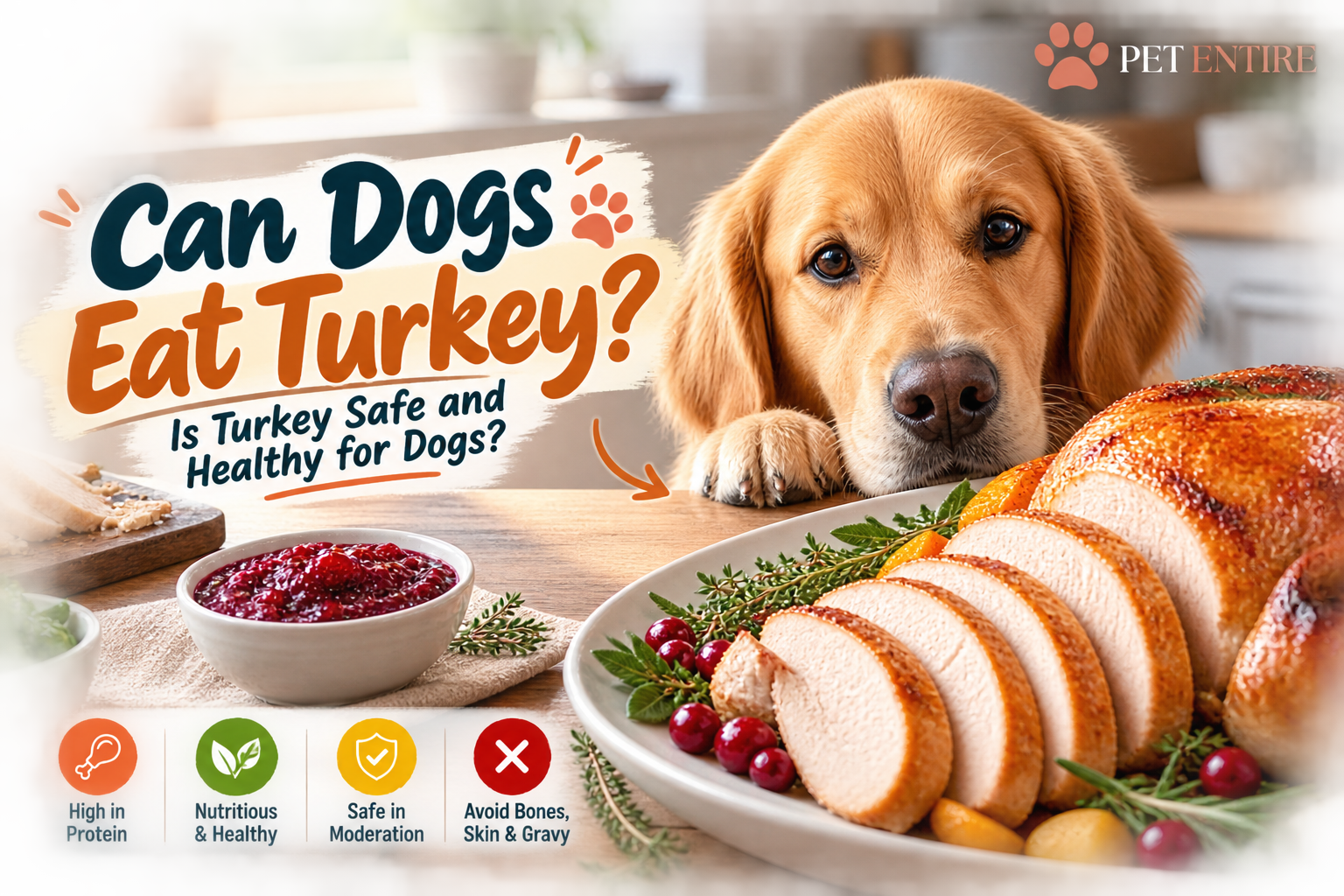
Can dogs eat turkey? Yes. Dogs can eat plain, fully cooked, boneless meat in a small amount. The biggest risks come from bones, skin, excess fat, and seasoning, which may cause choking, digestive problems, pancreatitis, or toxicity.
For most healthy dogs, this meat can provide useful protein and several nutrients. The preparation matters more than the food itself. A slice of lean breast is very different from meat covered in gravy or cooked with garlic and onion.
Is Plain Turkey Safe for Dogs?
Plain meat is generally safe for healthy dogs when thoroughly cooked and free from bones and harmful ingredients. Unseasoned turkey can work as an occasional treat, meal topper, or reward. Start with a small serving when your dog has never eaten it before.
Is Turkey Good for Dogs?
This poultry can provide lean protein, which helps maintain muscles and body tissues. It also contains vitamin B6, vitamin B12, niacin, selenium, phosphorus, zinc, choline, magnesium, and potassium. It should complement complete dog food rather than replace a balanced diet.
When Can Turkey Be Bad for Dogs?
The food becomes risky when preparation adds ingredients that dogs shouldn’t eat. Cooked bones can splinter, fatty portions can trigger digestive trouble, and onion or garlic can damage red blood cells. Rich holiday foods can also contribute to pancreatitis.
What Are the Benefits of Turkey for Dogs?
The nutritional value depends heavily on the cut and serving size. Skinless breast meat is usually a better choice than fatty trimmings. It can also make a tasty occasional reward for dogs that enjoy poultry and tolerate it well.
A complete commercial diet should remain the foundation of your dog’s nutrition. Dogs need balanced amounts of protein, fat, vitamins, minerals, and calories. Meat alone cannot provide that balance.
Turkey Is a Good Source of Protein
Turkey contains animal protein, which helps support muscles and body tissues. A small amount can also make regular food more appealing to a picky dog. Because it adds calories, the serving should fit within the dog’s total daily intake.
Vitamins and Minerals in Turkey
This meat provides several B vitamins and minerals that support normal metabolism and body function. Vitamin B6, vitamin B12, niacin, selenium, phosphorus, zinc, and choline are among its useful nutrients.
Turkey as a Lean Meat Option for Dogs
Skinless breast is relatively lean compared with fatty skin, drippings, and many processed meats. That makes it useful for owners managing a dog’s fat intake. Dogs with pancreatitis or other medical conditions still need individualized dietary advice from a veterinarian.
What Are the Risks of Feeding Turkey to Dogs?
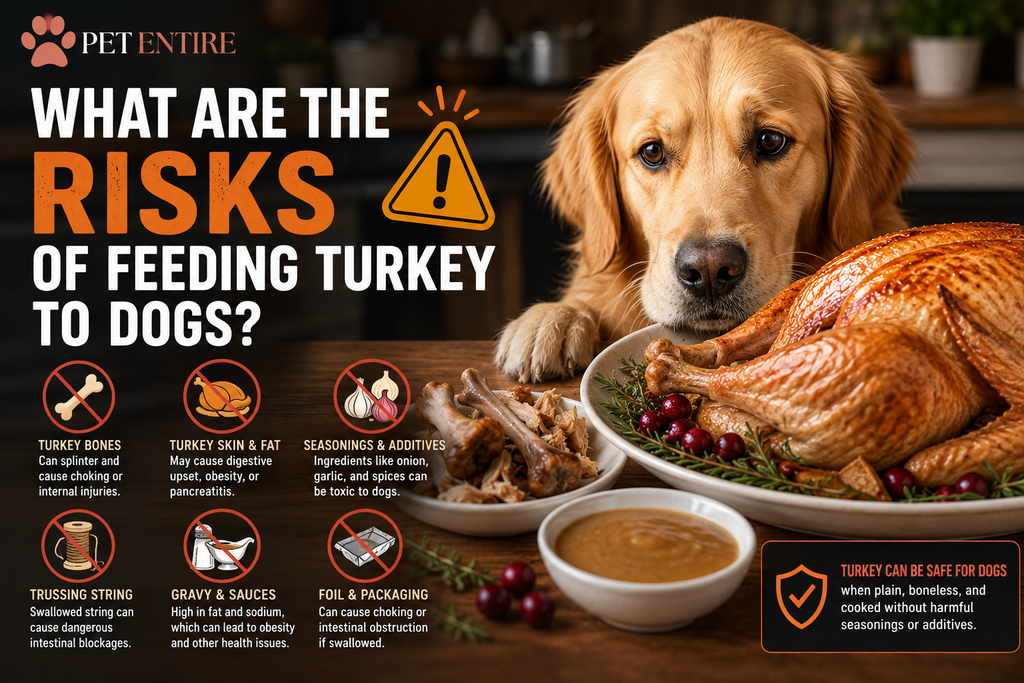
Most problems come from what surrounds the meat. Turkey skin, bones, gravy, seasoning, and processed ingredients can create risks that plain meat doesn’t have. Holiday kitchens also contain packaging and cooking materials that curious dogs may swallow.
Thanksgiving leftovers deserve extra caution. Bones, trussing twine, fatty foods, onions, garlic, and heavily seasoned dishes can all cause problems.
Turkey Bones Can Cause Choking or Injury
Turkey bones can splinter after cooking and create sharp fragments. These pieces can injure the mouth or digestive tract, become lodged, or cause an intestinal obstruction. Raw bones also carry bacterial concerns.
Turkey Skin and Fat Can Cause Digestive Problems
Skin, drippings, butter, and fatty trimmings can deliver a large dose of fat. This may cause vomiting or diarrhea and can contribute to pancreatitis, an inflammation of the pancreas that may require veterinary treatment. (VCA Animal Hospitals)
Seasonings and Added Ingredients Can Be Harmful
Garlic, onion, chives, and leeks belong to the Allium family and can damage red blood cells. Merck Veterinary Manual reports clinical signs in dogs after raw onion ingestion at about 15–30 g/kg. Garlic is more potent, with a reported toxic amount of roughly 5 g/kg. These figures are not safe-dose recommendations because individual sensitivity varies. (Merck Veterinary Manual)
A 40-pound dog weighs about 18.1 kg. The onion range would equal roughly 272–544 g based on that published range. Garlic may become concerning at substantially lower amounts. Concentrated onion or garlic powder can also deliver a large amount of Allium compounds in a small serving.
Raw Turkey May Contain Harmful Bacteria
Raw or undercooked poultry can contain Salmonella and other bacteria. Thorough cooking reduces this risk. It also protects people who handle the meat, bowls, utensils, and kitchen surfaces.
Why Turkey Trussing String Can Be Dangerous
Kitchen twine soaked with meat juices can smell irresistible to a dog. If swallowed, the string can act as a linear foreign body and become caught while the intestines continue moving. Such cases may require surgery. (VCA Animal Hospitals)
Brined Turkey Can Contain Too Much Sodium
Brined and pre-basted birds can contain substantial added sodium. This makes them a poor choice for dogs, especially those with heart or kidney conditions that require dietary management. A small piece of unseasoned meat is much easier to control.
Foil and Roasting Bags Are Another Hazard
Dogs may investigate discarded aluminum foil, roasting bags, or food-soaked packaging. Swallowing these materials can create a foreign-body obstruction. Keep used cooking materials inside a securely closed trash container.
How to Safely Feed Turkey to Your Dog
A safe serving starts before the food reaches the dinner table. Set aside a small portion before adding butter, salt, herbs, garlic, onion, or gravy. Cook it thoroughly and let it cool before offering it.
The ASPCA recommends boneless, fully cooked meat when owners choose to give pets a small holiday bite. (ASPCA)
Choose Plain, Fully Cooked Turkey
Choose lean meat without marinades, sauces, or spice rubs. Fully cooked turkey is preferable to raw poultry because proper cooking reduces bacterial exposure. Breast meat is often the easiest cut to portion.
Remove Bones, Skin, and Excess Fat
Separate the meat from all bones before serving. Trim visible fat and remove the skin, especially when the bird has been roasted with butter or oil. This reduces unnecessary fat and makes portion control easier.
Avoid Salt, Garlic, Onion, and Other Seasonings
Dogs don’t need human-style seasoning. Skip salt-heavy rubs, garlic powder, onion powder, spice blends, butter, and gravy. Concentrated onion and garlic products can be particularly concerning because they contain more Allium compounds in a smaller amount.
How Much Turkey Can Dogs Eat?
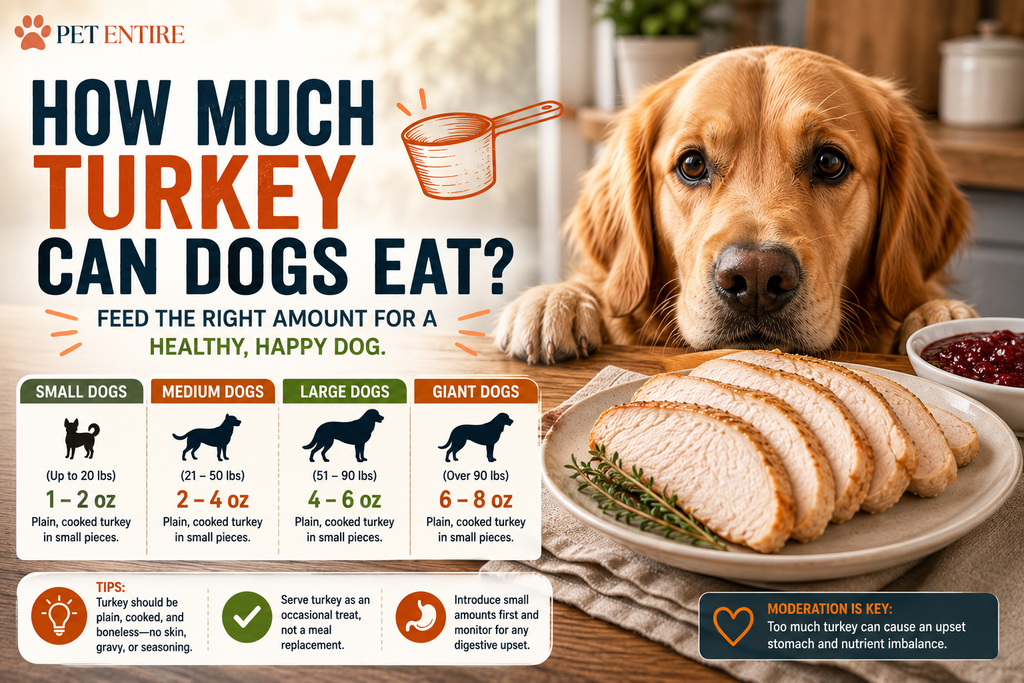
The amount depends on body size, calorie needs, activity, age, and overall health. A useful starting point is to keep all treats and extras near 10% of daily calories.
Skinless roasted turkey breast is roughly 135 calories per 100 g, or about 38 calories per ounce. A 1-inch cube weighing around 15–20 g provides approximately 20–27 calories.
For these examples, daily calories use the veterinary-style calculation RER = 70 × body weight in kg^0.75, followed by approximately 1.6 × RER for a typical neutered adult dog.
| Dog weight | Approx. daily calories | 10% treat ceiling | Rough turkey equivalent |
| 10 lb | 348 kcal | 35 kcal | About 0.9 oz / 26 g |
| 40 lb | 985 kcal | 98 kcal | About 2.6 oz / 73 g |
| 70 lb | 1,498 kcal | 150 kcal | About 3.9 oz / 111 g |
These amounts are ceilings, not recommended servings. The 10% allowance includes every treat, table scrap, chew, and food topper consumed that day.
Turkey Portions for Small Dogs
Small dogs can reach their treat ceiling surprisingly quickly. One or two 1-inch cubes may represent a meaningful share of a toy breed’s daily extra calories. Puppies also need careful nutrition because growth changes their calorie and nutrient requirements.
Turkey Portions for Medium and Large Dogs
Larger dogs have greater calorie requirements, but that doesn’t make unlimited servings appropriate. Use the table as a calorie-based reference rather than a fixed prescription.
How Often Can Dogs Eat Turkey?
Dogs can have turkey as an occasional treat unless it has been deliberately included in a balanced feeding plan. Daily extras can gradually increase calorie intake and displace complete dog food.
Can Dogs Eat Ground Turkey?
Plain cooked ground turkey can be suitable for many healthy dogs. Check the fat content before buying it because ground products can vary considerably.
Is Cooked Ground Turkey Safe for Dogs?
Cooked ground turkey is generally appropriate when prepared without harmful ingredients. Cook it thoroughly and drain excess grease. A lean variety can be easier to fit into a controlled calorie budget.
How to Prepare Ground Turkey for Dogs
Cook ground turkey thoroughly without adding butter, oil, salt, garlic, onion, or spices. Drain excess fat and allow the meat to cool. A small amount can be mixed with regular food as an occasional topper.
Can Dogs Eat Turkey Bones, Necks, or Wings?
Can dogs eat turkey bones? No. Cooked poultry bones can splinter and cause choking, perforation, or obstruction. Raw bones add bacterial concerns, so neither option should become a casual Thanksgiving treat.
Necks and wings contain bones as well. Their natural shape doesn’t make them automatically safer for household feeding.
Can Dogs Eat Turkey Necks or Wings?
Some raw-feeding plans include raw meaty bones, but that doesn’t make them risk-free. Bone size, shape, hardness, chewing behavior, and the dog’s size can all affect the danger. Raw-meaty-bone feeding should be discussed with a veterinarian who understands the dog’s diet and medical history.
Can Dogs Eat Turkey Deli Meat, Bacon, or Sausage?
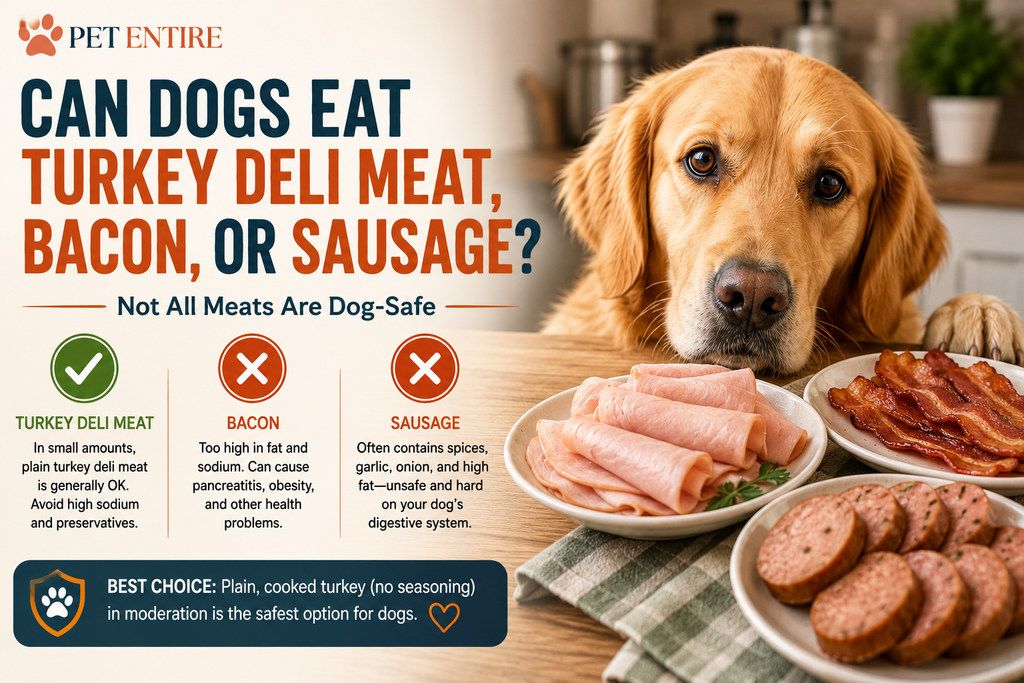
Deli meat, bacon, sausage, and smoked varieties can contain added sodium, preservatives, fat, spices, and other ingredients. Those additions make processed products less suitable than fresh poultry.
Plain meat gives you much more control over what enters your dog’s diet. Check labels for sodium, seasoning blends, onion, garlic, and unnecessary additives.
Can Dogs Eat Turkey Lunch Meat or Smoked Turkey?
A small accidental bite of lunch meat doesn’t automatically mean an emergency. Processed and smoked varieties aren’t ideal regular foods because they can contain significant sodium and other additives.
Can Dogs Eat Turkey Bacon?
Turkey bacon is still processed bacon. It may contain sodium, fat, preservatives, and flavorings. Calling it turkey doesn’t make it nutritionally equivalent to plain breast meat.
Can Dogs Eat Turkey Sausage?
Turkey sausage often contains spices, salt, fat, onion, garlic, or other flavorings. The same caution applies to seasoned turkey burgers and jerky. Plain cooked poultry is a simpler choice.
When Should You Avoid Giving Turkey to Your Dog?
Some dogs need stricter dietary control than others. A healthy adult may tolerate a small serving while a dog with chronic gastrointestinal problems may react badly to a sudden food change.
Dogs With Sensitive Stomachs
Dogs with sensitive stomachs may develop vomiting, diarrhea, gas, or reduced appetite after eating unfamiliar foods. Introduce new foods gradually and stop if symptoms develop.
Dogs With Certain Health Conditions
Dogs with pancreatitis may need a carefully controlled low-fat diet. Dogs with obesity, diabetes, heart disease, or other conditions may also have specific dietary requirements. Ask your veterinarian before making major dietary changes.
Dogs With a Possible Turkey Allergy
A dog can develop a food allergy to an animal protein. Possible signs include persistent itchy skin, recurrent skin problems, ear issues, or gastrointestinal symptoms. These signs don’t prove turkey is the cause.
What Should You Do If Your Dog Eats Unsafe Turkey?
Start by identifying what your dog consumed and approximately how much. Plain meat is very different from a cooked bone, string-wrapped bird, or stuffing containing onion and garlic.
Don’t induce vomiting unless a veterinarian or poison-control professional specifically tells you to do so. Some swallowed objects can cause additional injury when brought back up.
Signs of an Upset Stomach
Vomiting, diarrhea, gas, reduced appetite, and mild abdominal discomfort can occur after eating rich or unfamiliar food. Keep your dog hydrated and monitor the situation closely.
Signs of a More Serious Problem
Repeated vomiting, severe abdominal pain, weakness, collapse, breathing difficulty, bloody stool, or inability to keep water down can signal a serious problem.
If your dog swallowed trussing string, a bone, foil, or another foreign object, don’t wait for symptoms before seeking professional advice.
When to Contact a Veterinarian
Contact your veterinarian promptly after significant exposure to onion, garlic, bones, trussing string, or a large amount of fatty food.
The ASPCA Animal Poison Control Center can be reached at 888-426-4435. The Pet Poison Helpline is 855-764-7661. Both services charge a consultation fee.
Poison-control professionals can calculate exposure based on your dog’s weight and the amount consumed. Keep the food package or ingredient list available when you call.
Turkey vs. Chicken: Which Is Better for Dogs?
Turkey and chicken can both provide animal protein when prepared appropriately. Neither is automatically better for every dog. The better choice depends on tolerance, calorie needs, current diet, and any diagnosed food allergy.
For dogs that tolerate poultry, either option can work as an occasional food. If your dog already eats chicken without problems, there may be little reason to switch unless your veterinarian recommends another protein.
For more guidance, consider linking this section to your related Can Dogs Eat Chicken? article.
Frequently Asked Questions About Dogs and Turkey
This section answers common questions about poultry, holiday leftovers, and everyday feeding. The answers focus on preparation, portion size, and the ingredients that can make a seemingly harmless food unsafe.
Can dogs eat turkey burgers?
Dogs can eat plain cooked turkey meat, but many turkey burgers contain onion, garlic, salt, cheese, sauces, or seasonings. Check the ingredients before sharing one.
Can dogs eat cooked turkey?
Yes. Plain, fully cooked meat can be an occasional food for many healthy dogs. Remove bones and avoid skin, rich sauces, and seasoning.
Can dogs eat turkey skin?
Turkey skin is high in fat and can also carry seasoning and cooking residue. It is better to remove it before giving the meat to your dog.
Can dogs eat turkey gravy?
Gravy often contains fat, butter, salt, drippings, onion, garlic, or other rich ingredients. It isn’t a good routine food and can increase the risk of digestive upset or pancreatitis.
Does turkey make dogs sleepy?
Tryptophan is present in poultry, but the idea that it alone causes post-meal sleepiness is overstated. Large meals, digestion, activity, and a relaxing holiday environment can all make a dog tired.
Are dogs allergic to turkey?
Yes, dogs can have a food allergy to poultry or another protein. Persistent itching, digestive problems, ear infections, or recurring skin symptoms may justify a veterinary assessment.
Can dogs eat turkey every day?
Daily servings aren’t necessary for most dogs. Regular extras can increase calorie intake and displace balanced food. Unless the meat is part of a properly formulated diet, occasional servings are the better approach.
Final Verdict: Can Dogs Eat Turkey?
Can dogs eat turkey? Yes, healthy dogs can usually enjoy a small serving of plain, fully cooked, boneless meat. The major hazards come from bones, fatty skin, rich sauces, toxic seasonings, processed products, and holiday cooking materials.
The safest Thanksgiving strategy is simple. Set aside a small portion before seasoning the family meal. Keep bones, twine, foil, roasting bags, gravy, onion, and garlic away from your dog. If an unsafe item is swallowed, contact your veterinarian or a poison-control service rather than waiting for serious symptoms.