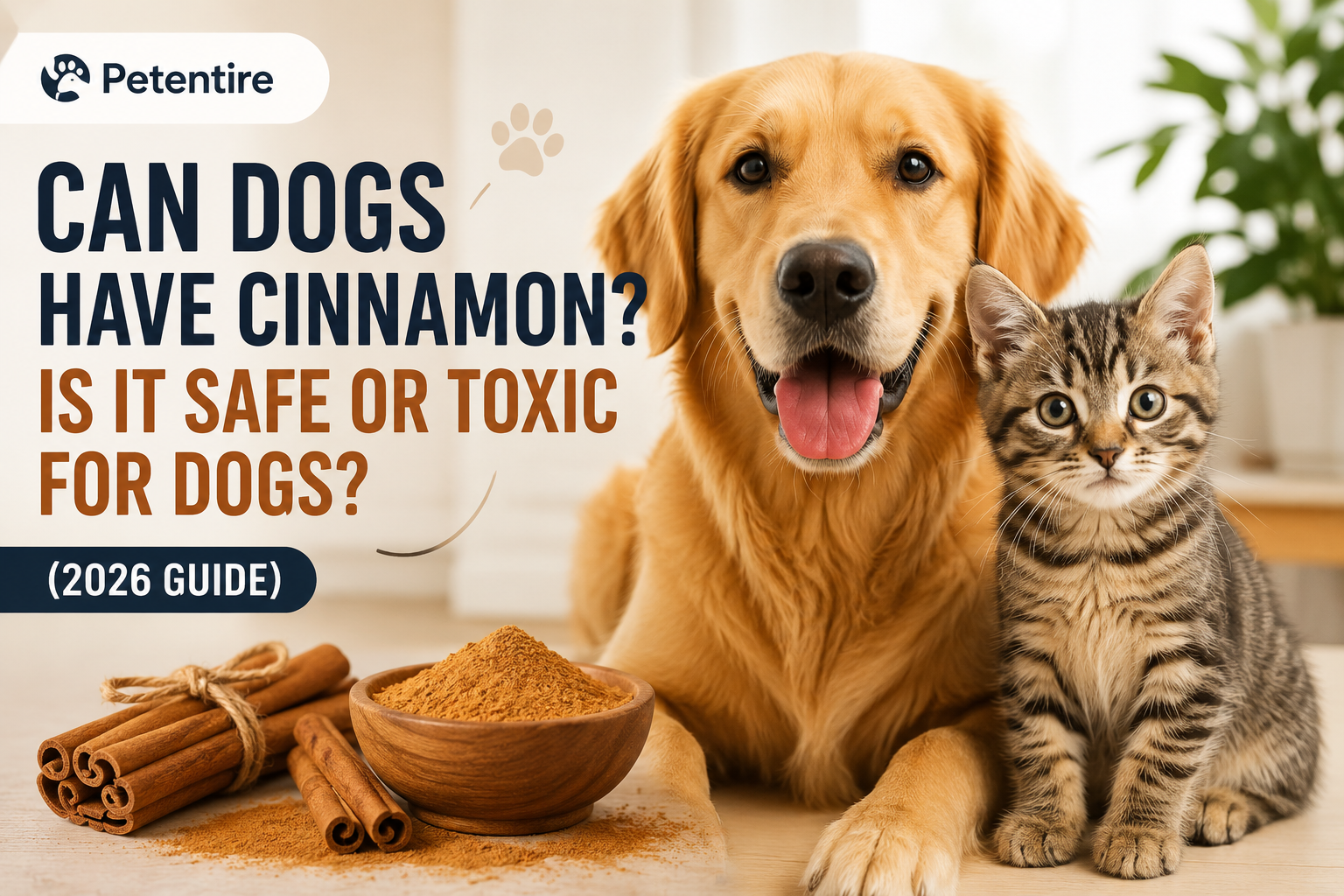
Picture the scene. You’re baking snickerdoodles on a lazy Sunday morning, and your golden retriever swipes one right off the counter. Your stomach sinks. Suddenly, you’re wondering: can dogs have cinnamon without a trip to the emergency vet? Can dogs have cinnamon in small amounts, or should you avoid it completely? And if your dog has already eaten something containing cinnamon, can dogs have cinnamon safely without any side effects?
The short answer is that plain culinary cinnamon is not considered highly toxic to dogs, but it isn’t a health food for them either. So, can dogs have cinnamon as an occasional ingredient? In small amounts, most healthy adult dogs are unlikely to experience serious problems from plain ground cinnamon. However, different forms of cinnamon carry very different risks, and cinnamon ,flavored human foods often contain ingredients that are far more dangerous than the spice itself.
This guide explains can dogs have cinnamon safely, which forms should be avoided, what the evidence actually supports, and when you should contact your veterinarian.
Disclaimer: This article is for general educational purposes and does not replace veterinary advice. If your dog has consumed a large amount of cinnamon, cinnamon essential oil, or a product that may contain potentially toxic ingredients, contact your veterinarian or a recognized animal poison-control service for guidance.
Can Dogs Eat Cinnamon? The Quick Answer
If you’re asking can dogs have cinnamon, the answer is generally yes in very small amounts of plain ground cinnamon, although there is no nutritional need to add it to a dog’s diet. Most healthy adult dogs who accidentally lick up a stray sprinkle from a cookie or countertop are unlikely to have a serious reaction.
That said, cinnamon is not a required part of a canine diet, and larger amounts, concentrated products, or certain forms can cause problems. In particular:
- Cinnamon essential oil should not be given to dogs.
- Cinnamon sticks can splinter or irritate the mouth and pose a choking risk.
- Cinnamon-flavored human foods such as rolls, cereals, and baked goods often contain sugar, fat, or other ingredients that are far more concerning than the cinnamon itself.
If you’re wondering can dogs have cinnamon intentionally added to their food, talk to your veterinarian first, especially if your dog is a puppy, a senior, has a chronic condition, or takes medication.
What Is Cinnamon? A Quick Overview
Cinnamon comes from the inner bark of evergreen trees in the Cinnamomum family, native to Sri Lanka, India, and parts of Southeast Asia. Growers peel the bark, dry it, and let it curl into slim rolls called quills, which are then ground into the fragrant brown powder in your spice rack.
The spice contains several notable compounds, including cinnamaldehyde, which gives cinnamon its distinctive aroma, and coumarin, a naturally occurring compound found in higher concentrations in some varieties. These are the two ingredients most often discussed when people ask can dogs have cinnamon.
Four types dominate the global spice market: Ceylon, Cassia, Saigon, and Korintje. Most supermarket cinnamon in the United States is Cassia because it’s less expensive. Ceylon, often called “true cinnamon,” is milder and generally more expensive.
Ceylon Cinnamon vs. Cassia Cinnamon: Which Is Safer for Dogs?
The main difference between Ceylon and Cassia cinnamon relevant to dogs is the amount of coumarin they contain. Ceylon cinnamon generally contains much less coumarin than Cassia cinnamon. High or repeated coumarin exposure can be concerning for the liver, particularly in animals with existing liver disease or those taking certain medications.
A few important points:
- Ceylon cinnamon typically contains far lower levels of coumarin than Cassia.
- Coumarin content can vary from batch to batch and between suppliers.
- Neither variety is a necessary part of a dog’s diet.
- If cinnamon is going to be used at all, many veterinarians would prefer a lower-coumarin option like Ceylon.
Rather than treating one type as “safe” and the other as “dangerous,” think of Ceylon as the lower-coumarin option that some veterinarians favor when small amounts of cinnamon are being considered. This distinction is useful when deciding can dogs have cinnamon as an occasional food ingredient.

| Feature | Ceylon Cinnamon | Cassia Cinnamon |
|---|---|---|
| Common origin | Sri Lanka | China, Indonesia, Vietnam |
| Coumarin level | Generally low | Generally higher |
| Color | Tan, light brown | Reddish-dark brown |
| Texture | Soft, crumbly quills | Hard, thick bark |
| Price | Higher | Lower |
| General preference for dogs | Preferred if used | Use with more caution |
Is Cinnamon Good for Dogs? What the Evidence Actually Shows
You may have seen articles online listing impressive health benefits of cinnamon, including anti-inflammatory effects, blood sugar control, dental support, and more. Most of these claims come from human or laboratory studies, and results in people or test tubes do not automatically apply to dogs.
So, can dogs have cinnamon because it provides meaningful health benefits? There is currently not enough evidence to treat cinnamon as a canine health supplement.
Anti-Inflammatory Properties
Some compounds in cinnamon have shown anti-inflammatory activity in laboratory research. Whether feeding cinnamon meaningfully reduces inflammation in dogs, particularly dogs with arthritis, is not well established. Cinnamon should not be used as a replacement for veterinary treatment of joint disease.
Blood Sugar and Diabetes
Cinnamon is frequently discussed in relation to blood sugar in humans, but the evidence is mixed even in people. There is not enough evidence to recommend cinnamon as a treatment for diabetes in dogs.
Owners of diabetic dogs should never change insulin dosing, diet, or veterinary treatment based on cinnamon. Any changes to a diabetic dog’s routine should go through the veterinarian managing that dog’s care.
Antioxidants
Cinnamon contains antioxidant compounds. However, evidence that feeding cinnamon produces meaningful antioxidant health benefits in dogs is limited. A dog’s overall diet, exercise, and preventive care matter far more than any single spice.
Dental Health
Cinnamon does have antimicrobial properties in laboratory settings, and it sometimes appears as a flavoring in dog dental treats. Real dental care in dogs comes from regular tooth brushing, appropriate chews, and professional dental cleanings, not from sprinkling cinnamon on food.
Senior Dogs
Some people give small amounts of cinnamon to older dogs hoping it will help with age-related issues. Evidence for these benefits in dogs is limited.
Senior dogs often take medications and may have kidney, liver, or heart conditions that make new dietary additions worth discussing with a veterinarian first. Therefore, the question can dogs have cinnamon should be approached more cautiously when dealing with senior pets.
The overall picture is simple: cinnamon is not a proven canine health supplement, and it does not replace veterinary medicine.
Is Cinnamon Bad for Dogs? Risks and Side Effects
Whether cinnamon causes problems depends on the form, the amount, and the individual dog. Understanding these factors is important if you’re asking can dogs have cinnamon without experiencing side effects.
Coumarin and the Liver
Coumarin is the most-discussed concern with cinnamon in dogs. Excessive or repeated exposure to coumarin can stress the liver.
Dogs with existing liver disease or dogs taking certain medications, including some anticoagulants, may need extra caution. Small culinary amounts of cinnamon on rare occasions are unlikely to cause liver problems in a healthy adult dog, but chronic high intake is a different situation.
Respiratory Irritation from Cinnamon Powder
Fine cinnamon powder can irritate the nose, throat, and airways if inhaled. Coughing, sneezing, or difficulty breathing can follow a puff of powder to the face.
Dogs with short muzzles, such as pugs, bulldogs, and shih tzus, and dogs with existing respiratory conditions can be more sensitive. Never blow, dump, or puff cinnamon powder near your dog.
Mouth and Skin Irritation
Chewing cinnamon sticks or biting into concentrated cinnamon products can irritate the gums, tongue, and lining of the mouth. Direct contact with concentrated cinnamon oils on skin can also cause irritation.
Allergic Reactions
True allergic reactions to cinnamon in dogs are uncommon but can occur. Possible signs include itching, hives, swelling, or gastrointestinal upset.
If you notice these signs, especially trouble breathing or facial swelling, contact your veterinarian promptly.
Different Forms of Cinnamon: Which Ones Should You Worry About?
When people ask can dogs have cinnamon, it is important to identify the exact form involved. Cinnamon powder, cinnamon sticks, essential oils, and cinnamon-flavored foods are not equivalent.
Is Cinnamon Powder Safe for Dogs?
Small amounts of plain ground cinnamon, ideally Ceylon, are generally the least concerning form. To reduce the risk of inhalation, always stir the powder thoroughly into food rather than sprinkling it loose on top.
Cinnamon powder is not a required addition to any dog’s meal. If you’re still wondering can dogs have cinnamon powder, remember that occasional tiny amounts are generally less concerning than large quantities.
Are Cinnamon Sticks Safe for Dogs?
Cinnamon sticks are best avoided. They are hard, can splinter, and may irritate the mouth.
Chewed pieces can pose a choking or gastrointestinal risk, and the concentrated oils in the bark can irritate oral tissues. Keep decorative cinnamon sticks, potpourri, and mulled-cider sticks out of your dog’s reach.
Is Cinnamon Essential Oil Safe for Dogs?
Cinnamon essential oil is highly concentrated and is not something to intentionally give to a dog. Essential oils in general can cause irritation, gastrointestinal upset, or toxicity when ingested by pets, and inappropriate skin application can cause irritation or burns.
If you’re asking can dogs have cinnamon essential oil, the answer is no. Cinnamon essential oil should not be added to food, applied to the skin, or used on dogs without specific direction from a veterinarian.
If a dog has ingested cinnamon essential oil or been heavily exposed to it, contact your veterinarian, an emergency veterinary hospital, or an animal poison-control service for guidance.
Can Dogs Eat Cinnamon Rolls or Cinnamon Bread?
Cinnamon is usually not the main problem in a cinnamon roll. The bigger concerns include:
- High sugar and fat content, which can cause gastrointestinal upset and, in some dogs, contribute to pancreatitis.
- Xylitol, a sugar substitute that is highly toxic to dogs.
- Raw yeast dough, which can be dangerous if a dog eats it before baking.
- Other add-ins such as chocolate, raisins, macadamia nuts, or certain spices such as nutmeg.
If your dog eats a cinnamon roll, the biggest question is what else was in it. Save the packaging or recipe and contact your veterinarian if you’re unsure.
Raw Yeast Dough: A Specific Warning
Raw yeast dough deserves its own note. If a dog swallows uncooked bread or roll dough that contains active yeast, the dough can continue to rise and expand inside the warm stomach, potentially causing painful distension.
Yeast fermentation also produces alcohol, which can lead to alcohol intoxication in dogs. If your dog has eaten raw yeast dough, contact your veterinarian promptly.
Can Dogs Eat Cinnamon Toast or Cinnamon Cereal?
Cinnamon toast and cereals like Cinnamon Toast Crunch are generally not good choices for dogs. They tend to be high in sugar and refined carbohydrates and offer little that a dog needs nutritionally.
A very small nibble is usually not dangerous by itself, but they shouldn’t become a routine snack. When considering can dogs have cinnamon cereal, the ingredients beyond cinnamon are often the more important concern.
Can Dogs Eat Cinnamon Oatmeal?
Plain, unsweetened, fully cooked oatmeal with a very small pinch of Ceylon cinnamon can be a reasonable occasional treat for most healthy dogs.
Skip flavored instant oatmeal packets, which often contain added sugar, artificial flavors, and sometimes “spices” that may include nutmeg. Cook oatmeal in water, let it cool, and offer a small portion.
Can Dogs Eat Cinnamon Applesauce?
Homemade, unsweetened applesauce with a small dusting of Ceylon cinnamon is usually acceptable in small amounts.
Store-bought varieties can contain added sugar or artificial sweeteners, so read the label carefully and avoid anything with xylitol.
Snickerdoodles and Similar Cookies
Snickerdoodles and similar cinnamon-sugar cookies are not a great snack for dogs. They are high in sugar and fat, and some recipes contain cream of tartar.
Cream of tartar in very large amounts can potentially disrupt potassium levels, but a single ordinary cookie is unlikely to cause a severe electrolyte problem on its own.
The bigger concern with most bakery cookies is the fat, sugar, and any additional problematic ingredients such as nutmeg or raisins.
How Much Cinnamon Can Dogs Eat? Is There a Safe Dose?
There is no universally established “safe cinnamon dose” for every dog. If you’re asking can dogs have cinnamon in a specific quantity, the answer depends on several factors.
How much a dog can tolerate depends on:
- The dog’s size and weight
- The dog’s overall health, including liver and kidney function
- Any medications the dog takes
- The form of cinnamon, such as powder, essential oil, or baked goods
- The specific type of cinnamon, such as Ceylon or Cassia
- Whether other ingredients are involved
A few general points most veterinarians would agree on:
- Small amounts of plain culinary cinnamon are generally less concerning than large amounts or concentrated cinnamon products.
- Cinnamon does not need to be a regular part of a healthy dog’s diet.
- If you want to add cinnamon intentionally, ask your veterinarian first, especially for puppies, seniors, dogs with chronic conditions, or dogs on medication.
- Concentrated forms such as essential oil should be avoided.
Rather than aiming for a specific teaspoon amount, think in terms of “small, occasional, and cleared with your vet.” That’s a more honest framework than any chart that pretends there’s a guaranteed-safe dose for every dog.
My Dog Ate Too Much Cinnamon — What Should I Do?
First, take a breath. Note what your dog ate: plain powder, a cinnamon stick, essential oil, or a cinnamon-containing food.
If it was a food product, save the packaging and check the ingredient list for anything else that might be more concerning, including xylitol, chocolate, raisins, macadamia nuts, or nutmeg.
Do not attempt to induce vomiting at home unless a veterinarian or poison-control professional specifically tells you to.
Then contact one of the following:
- Your regular veterinarian
- A local emergency veterinary hospital
- A recognized animal poison-control service
Two commonly used services in the United States are the ASPCA Animal Poison Control Center and the Pet Poison Helpline. Both are consultation services and typically charge a fee. Phone numbers can change over time, so it is worth confirming current contact details from their official websites before you save them in your phone.
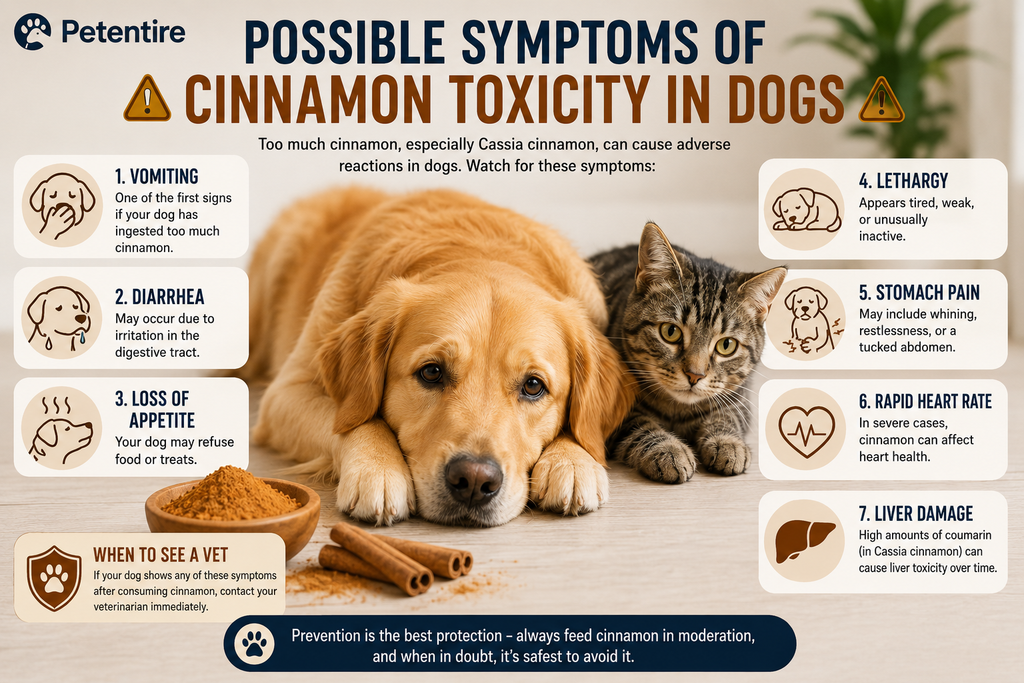
Possible Symptoms of Cinnamon Toxicity in Dogs
Symptoms vary depending on what was eaten, how much, and the individual dog. Possible signs after a significant cinnamon exposure can include:
- Vomiting
- Diarrhea
- Reduced appetite
- Mouth or tongue irritation
- Coughing or sneezing after inhaling powder
- Difficulty breathing after significant respiratory exposure
- Lethargy or general signs of not feeling well
- Signs consistent with other ingested ingredients, such as disorientation or weakness from xylitol
There is no reliable “wait X minutes and see” rule. Don’t wait for a specific symptom to appear before seeking professional advice, especially after a significant exposure to concentrated products, essential oils, or foods that may contain xylitol or other toxins.
When to Contact a Veterinarian
Reach out to your vet, an emergency veterinary hospital, or an animal poison-control service if:
- Your dog has ingested a large amount of cinnamon.
- Your dog has ingested cinnamon essential oil.
- Your dog ate a product that may contain xylitol, chocolate, raisins, macadamia nuts, or nutmeg.
- Your dog is showing symptoms such as repeated vomiting, breathing difficulty, weakness, or collapse.
- Your dog is a puppy, a senior, or has an underlying condition.
- You are simply unsure how serious the situation is.
If you’re searching can dogs have cinnamon because your dog has already eaten it, don’t rely only on a general online answer. The amount, product, and your dog’s health all matter.
Can Puppies Have Cinnamon?
Puppies have developing digestive systems and organs, and their nutritional needs are already well covered by a properly balanced puppy diet.
There isn’t a strong reason to introduce cinnamon to a puppy’s routine, and it makes sense to be more conservative with any new spice or human food during the first year.
If you’re asking can dogs have cinnamon and your dog is still a puppy, ask your veterinarian before adding cinnamon or other spices to the diet.
Safer Alternatives: Other Herbs and Spices for Dogs
Cinnamon isn’t the only spice people ask about. Several culinary herbs are often mentioned as generally reasonable for dogs in small amounts, though “dog-safe” does not mean every dog should be given them.
None of these are essential for a healthy canine diet.
| Spice/Herb | General Consideration |
|---|---|
| Ginger | May be used in some dog diets; ask your veterinarian about regular use, especially if your dog takes medication |
| Turmeric | Discuss with your veterinarian before using regularly; it can interact with certain conditions and medications |
| Basil | Small culinary amounts are generally less concerning |
| Parsley | Small culinary amounts may be appropriate; flat-leaf is generally preferred over spring parsley |
| Rosemary | Small culinary amounts may be appropriate; some caution is advised in dogs with a history of seizures |
As with cinnamon, small culinary amounts are usually less concerning than concentrated extracts or essential oils. Always introduce new foods slowly, and check with your veterinarian if your dog has a medical condition or is on medication.

Toxic Foods for Dogs to Keep Separate From Cinnamon
If you’re baking or cooking, be mindful of ingredients commonly paired with cinnamon that are known to be problematic for dogs, including:
- Xylitol, a sugar substitute that is highly toxic to dogs
- Chocolate and cocoa powder
- Raisins and grapes
- Macadamia nuts
- Nutmeg in significant amounts
- Onion and garlic powder
- Raw yeast dough
A cinnamon-flavored food is not automatically safe just because cinnamon itself is generally low-risk in small amounts. The rest of the ingredient list matters more.
FAQs: Can Dogs Have Cinnamon?
Are Dogs Allergic to Cinnamon?
True cinnamon allergies in dogs are uncommon but possible. Possible signs include itching, hives, ear scratching, facial swelling, or gastrointestinal upset.
Can Dogs Eat Cinnamon Cereal?
Cinnamon cereals like Cinnamon Toast Crunch are generally not a good choice for dogs. They tend to be high in refined sugar and offer little nutritional benefit. A stray piece off the floor is usually not an emergency, but they aren’t a healthy or recommended treat.
Can Dogs Eat Cinnamon Oatmeal?
Plain, unsweetened, fully cooked oatmeal with a small pinch of Ceylon cinnamon can be an occasional treat for most healthy adult dogs. Avoid flavored instant packets that contain added sugar, artificial flavors, or unspecified “spices.”
Can Dogs Eat Snickerdoodle Cookies?
Snickerdoodles aren’t ideal. They are high in sugar and fat, and some recipes include cream of tartar or nutmeg. A single small crumb is usually not an emergency, but they should not be a routine snack. If your dog eats a large amount, contact your veterinarian.
Can Dogs Eat Cinnamon Applesauce?
Homemade or store-bought unsweetened, xylitol-free applesauce with a small dusting of Ceylon cinnamon can be acceptable in small amounts. Always check the label of store-bought products for added sugar or artificial sweeteners.
Can Puppies Have Cinnamon?
It’s reasonable to be more conservative with puppies. Their nutritional needs are already covered by a proper puppy diet, and introducing new spices is not necessary. Ask your veterinarian before offering cinnamon to a puppy.
What Spices Should I Keep Away From My Dog?
Ingredients often flagged as toxic or risky for dogs include nutmeg in significant amounts, garlic powder, onion powder, and cocoa powder. When in doubt about a specific ingredient, contact your veterinarian or check a reputable veterinary source such as the ASPCA Animal Poison Control Center’s website.
Can Dogs Safely Smell Cinnamon?
Casual sniffing usually isn’t a problem. Dogs often dislike strong cinnamon aromas. Direct inhalation of loose powder, for example, if a dog knocks over an open jar, is different and can cause coughing or respiratory irritation.
Final Thoughts: Should You Give Your Dog Cinnamon?
So, can dogs have cinnamon? In small amounts of plain culinary cinnamon, most healthy adult dogs will be fine. But cinnamon is not a necessary part of a dog’s diet, and it is not a proven health supplement for dogs.
Here’s the sensible summary to take away:
- Small amounts of plain culinary cinnamon, ideally Ceylon, are generally less concerning than concentrated cinnamon products.
- Cinnamon essential oil should not be given to dogs.
- Cinnamon sticks are best avoided.
- Cinnamon-flavored human foods often contain sugar, fat, xylitol, chocolate, raisins, or other ingredients that are far more dangerous than the cinnamon itself.
- Be especially cautious with puppies, senior dogs, dogs with chronic health conditions, and dogs on medication.
- If your dog has consumed a significant amount of cinnamon or an unknown product, contact your veterinarian, an emergency veterinary hospital, or a recognized animal poison-control service.
- If you want to intentionally add cinnamon to your dog’s diet, talk to your veterinarian first.
Responsible feeding is about restraint, not generosity. When in doubt, keep the spice jar on the shelf and give your dog a plain, dog-appropriate treat instead — and let your veterinarian have the final word.
If you’re looking for more practical information about caring for dogs and cats, explore PetEntire’s pet care resources for helpful guides and tools designed for pet owners.